PREV
NEXT

KATA|Les fleurs, Les moutons ··· Les basse urines, Les fusils|2025

KATA
Les fleurs, Les moutons ··· Les basse urines, Les fusils
2025

Creator | Ko Youngchan
Text and Drawing | Park Suji
Photography | Choi Jieun, Lim Hyunkyu
Supervision | Kim Mirim
Translation | Park Suji
Design | Studio Tedo
Tract Image Source | Collection of Tracts by Souchet and Corvée


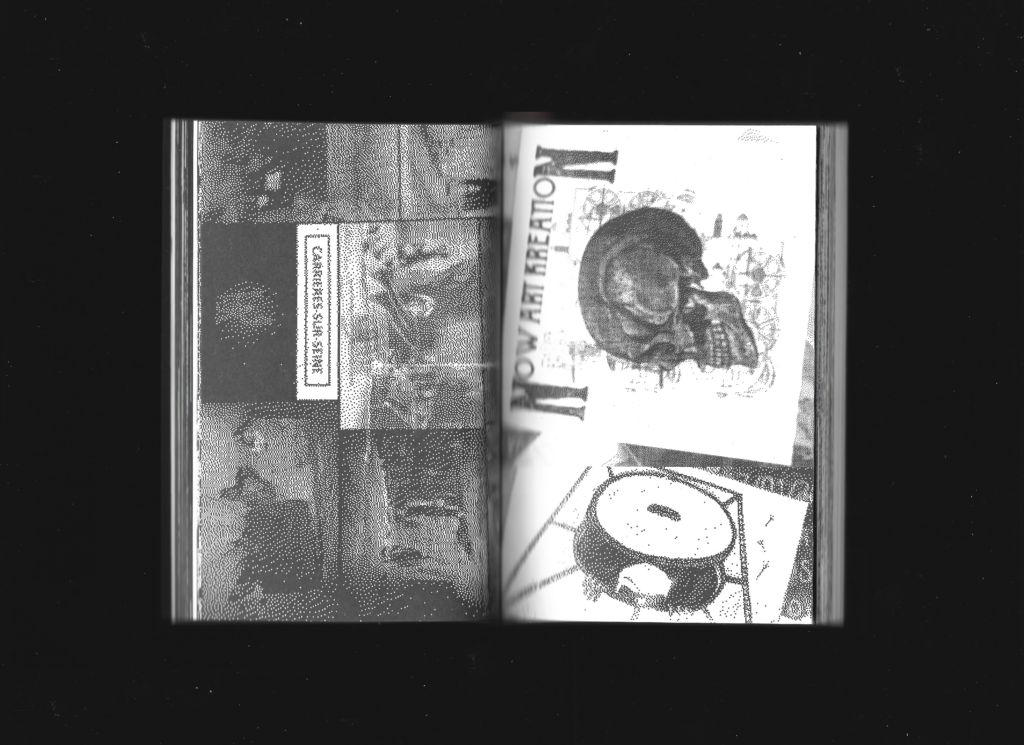
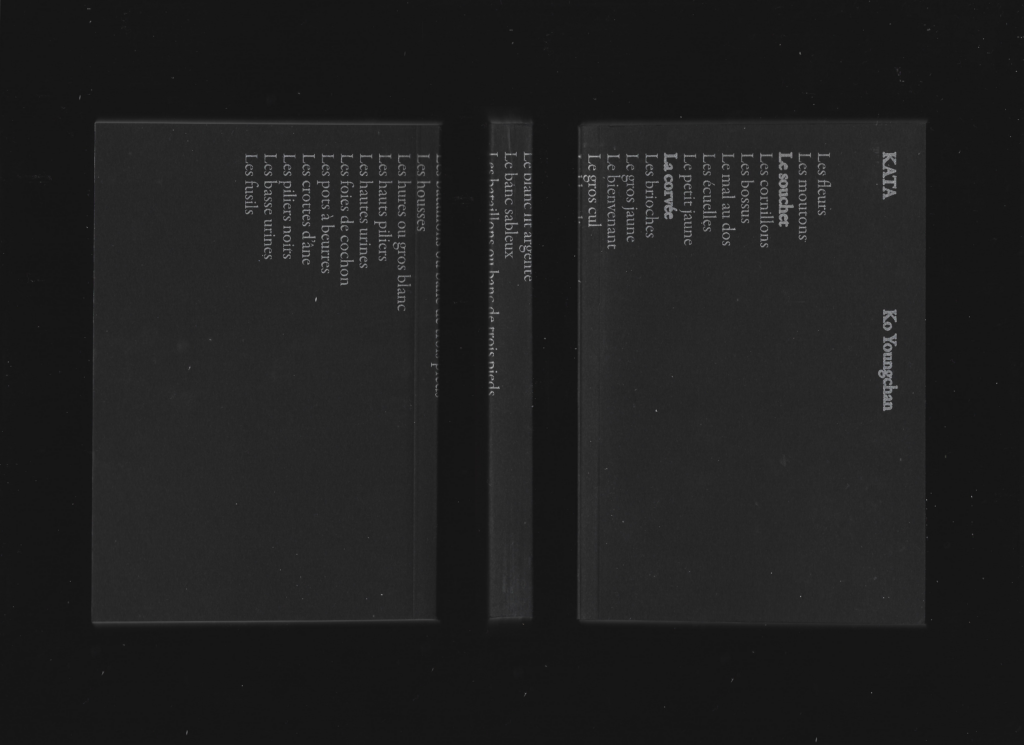
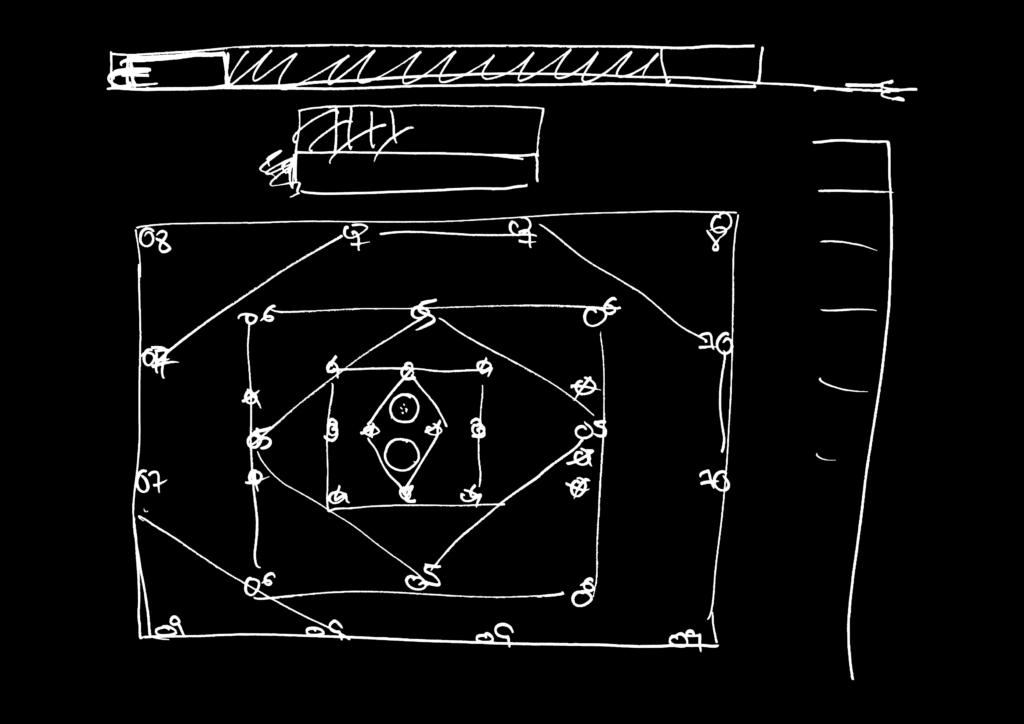
박수지 작가와의 협업으로 제작된 이 포켓북은 ‘도시탐험’과 ‘트락’을 주제로 한다. 도시탐험가 개인을 상징하는 짧은 글, 드로잉, 조각 등을 지하 공간 곳곳에 숨기고 또 찾는 ‘트락’은, 이 프로젝트에서 헨젤과 그레텔의 빵 조각처럼 글의 서사를 발견하게 하는 하나의 단서이자 길잡이로 작동한다.

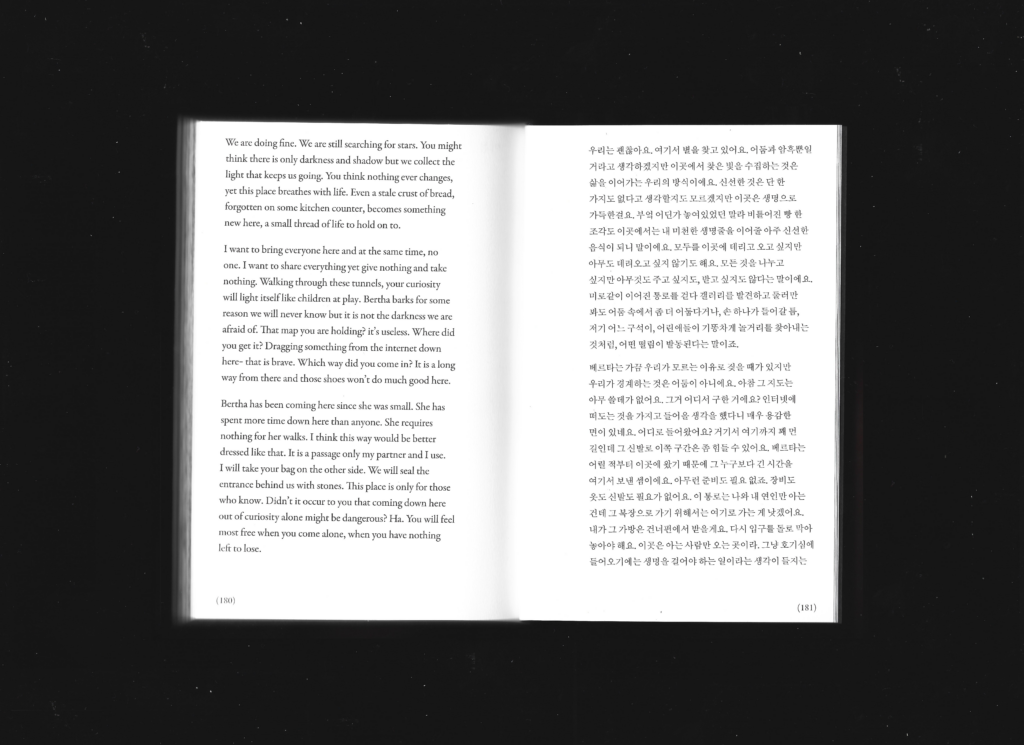
베르타는 가끔 우리가 모르는 이유로 짖을 때가 있지만 우리가 경계하는 것은 어둠이 아니에요. 아참 그 지도는 아무 쓸데가 없어요. 그거 어디서 구한 거에요? 인터넷에 떠도는 것을 가지고 들어올 생각을 했다니 매우 용감한 면이 있네요. 어디로 들어왔어요? 거기서 여기까지 꽤 먼 길인데 그 신발로 이쪽 구간은 좀 힘들 수 있어요. 베르타는 어릴 적부터 이곳에 왔기 때문에 그 누구보다 긴 시간을 여기서 보낸 셈이에요. 아무런 준비도 필요 없죠. 장비도 옷도 신발도 필요가 없어요. 이 통로는 나와 내 연인만 아는 건데 그 복장으로 가기 위해서는 여기로 가는 게 낫겠어요. 내가 그 가방은 건너편에서 받을게요. 다시 입구를 돌로 막아 놓아야 해요. 이곳은 아는 사람만 오는 곳이라. 그냥 호기심에 들어오기에는 생명을 걸어야 하는 일이라는 생각이 들지는 않았어요? 하하 뭐 그렇다고 뭔가를 심각하게 생각한다는 것은 아니에요. 가능성이 있어요. 가장 자유로운 하강은 혼자 할 때이긴 하죠. 정말 잃을 것이 없는 상태에 닿을 수 있다면 말이에요. 아니. 당신의 이름을 내게 말해줄 필요는 없어요.

나도 당신에게 내 이름을 말해주지 않을 것이니 말이죠.

This pocketbook, created in collaboration with artist Suji Park, focuses on the themes of “urban exploration” and “tract.” The “tract,” which involves hiding and rediscovering short texts, drawings, and sculptures representing individual urban explorers throughout underground spaces, functions as a clue and guide for uncovering the narrative in this project—much like breadcrumbs in the story of Hansel and Gretel.

Bertha has been coming here since she was small. She has spent more time down here than anyone. She requires nothing for her walks. I think this way would be better dressed like that. It is a passage only my partner and I use. I will take your bag on the other side. We will seal the entrance behind us with stones. This place is only for those who know. Didn’t it occur to you that coming down here out of curiosity alone might be dangerous? Ha. You will feel most free when you come alone, when you have nothing left to lose.

You don’t need to tell me your name. I won’t tell you mine either.

PREV
NEXT

버닝브릿지스 사가|Burning Bridges SAGA|2024

버닝브릿지스 사가
Burning Bridges SAGA
2024

with
Théo Combaluzier, Flavie Loreau, Berni*e Poikāne, Murphy Yum, Park Yuki


버닝브릿지스 사가는 고영찬, 머피염, 박유키, 테오 콤발뤼지에(Théo Combaluzier), 플라비 로호(Flavie Loreau), 베르니 포아카네(Berni*e Poikāne), 총 여섯 명 의 한국, 프랑스 및 라트비안 작가들의 글로 구성된 웹진이다. 이들은 차례로 목포, 무주, 부산, 아르데슈(Ardéche), 드롬(Drôme), 그르노블(Grenoble), 리가(Rīga) 등 각 나라의 중앙을 벗어난 지역에서 예술 활동을 지속하고 있다. 지정학적으로 지방을 거처로 삼으며 그 주변 장소들에서 갖는 애정과 호기심, 그렇지만 주로 수도권을 활동 기반으로 삼으며 느낄 수밖에 없는 불편함과 외로움 같은 위치적 이격을 통해 ‘탈중앙화’와 ‘네오-뤼럴리즘’에 대해 관심을 기울인다.
Burning Bridges Saga is a webzine composed of writings by six artists from Korea, France, and Latvia: Ko Youngchan, Murphy Yum, Park Yuki, Théo Combaluzier, Flavie Loreau, and Berni*e Poikāne. These artists are each engaged in ongoing creative practices in regions outside the central hubs of their respective countries—places like Mokpo, Muju, Busan, Ardèche, Drôme, Grenoble, and Rīga. By living and working in these geographically peripheral areas, they cultivate a sense of affection and curiosity toward the surrounding landscapes. At the same time, they grapple with a sense of distance, discomfort, and isolation that often comes from operating within art ecosystems still largely centered in metropolitan capitals. Through these layered experiences of spatial dislocation, the project turns its attention to ideas of decentralization and neo-ruralism.

PREV
NEXT

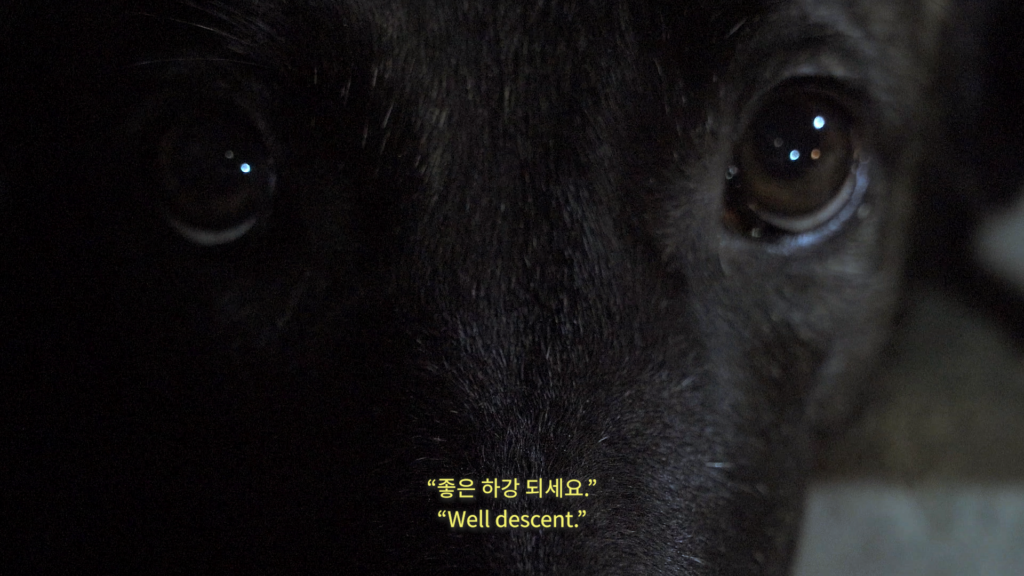
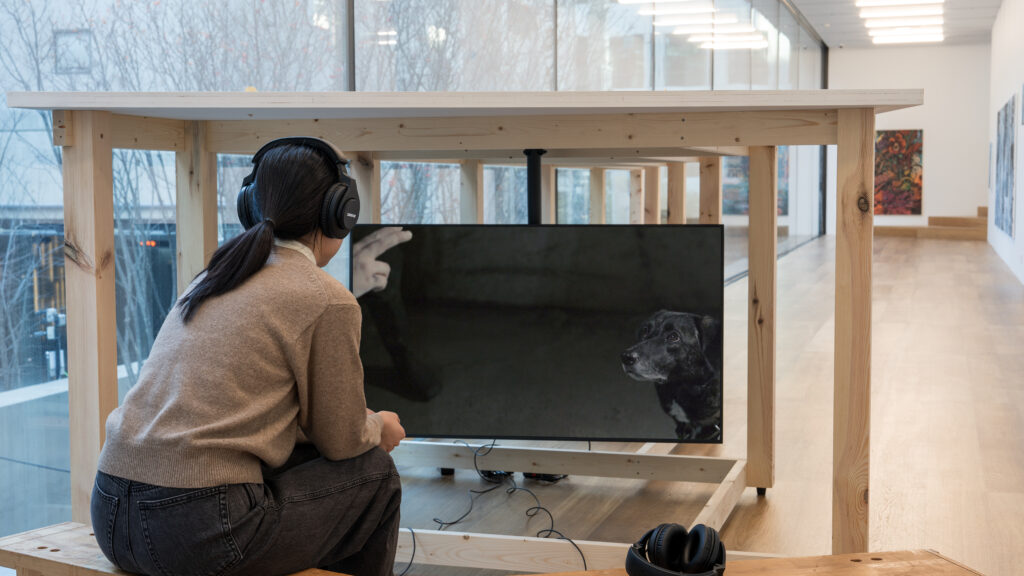
KATA: Bonne descente|KATA: Well descent|single-channel video|17′ 32″|2025

KATA: Bonne descente
KATA: Well descent
single-channel video|17′ 32″|2025

DirectorㅣKo Youngchan
ProducerㅣChoi Jieun
CastㅣBertha, Corvée, Souchet
Sound Designㅣjungsan-in@Bozar Bunsik
Sound Mixing & MasteringㅣBozar Bunsik
ColoristㅣShishi Jihyun Min
Title DesignㅣStudio Tedo
Camera & EditingㅣKo Younchan
Shooting AssistantㅣLim Hyunkyu
WritingㅣKo Youngchan
SupervisionㅣPark Suji
TranslationㅣPark Suji
Strata List TranslationㅣChat GPT
Drawing sourceㅣLouvre Museum Collection Database

Thanks to
Jean Gabriel Hautreux, Michel Racoillet

Slide 7-8
© SONGEUN Art and Cultural Foundation and the Artists. All rights reserved.
Photo: STUDIO JAYBEE


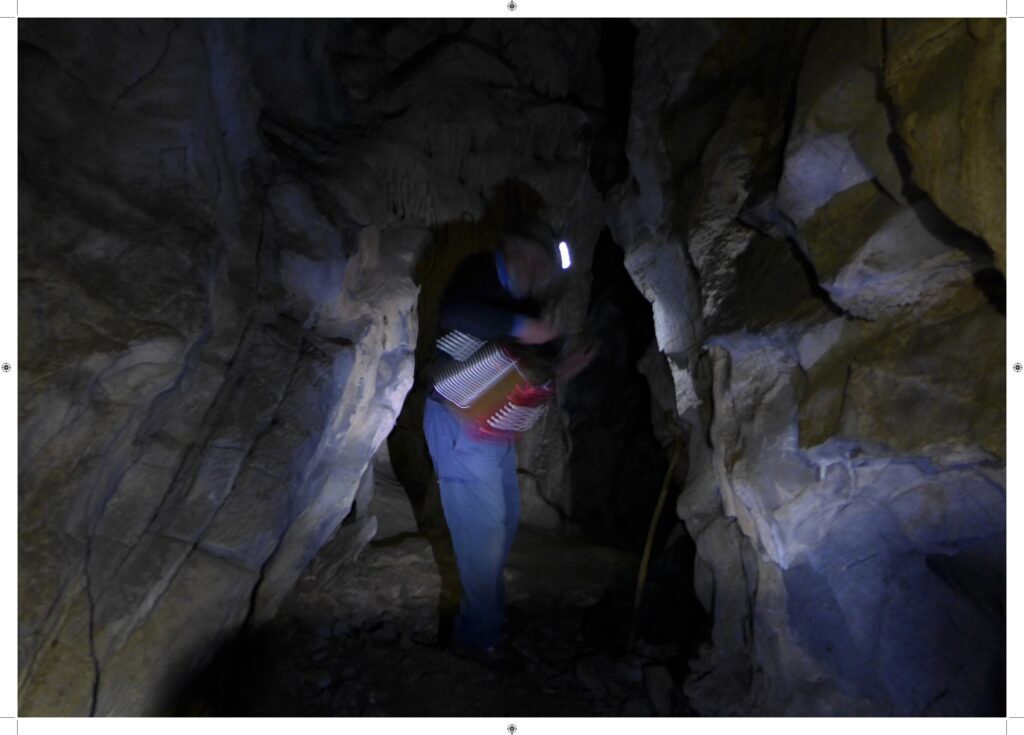
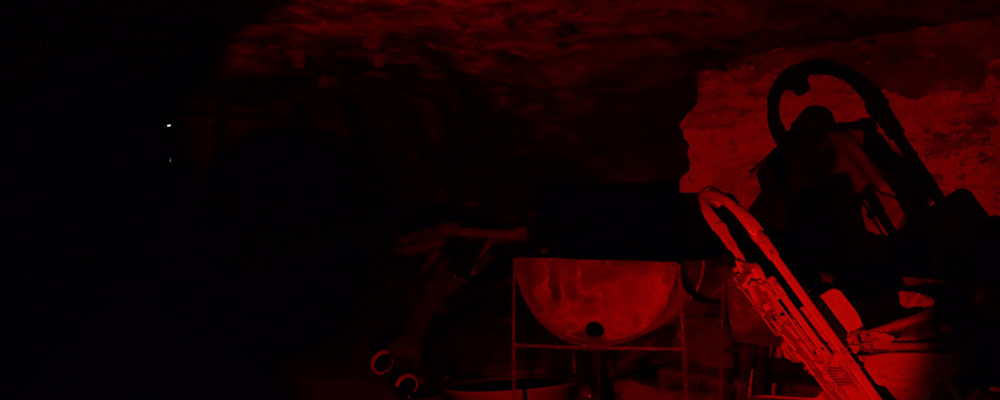
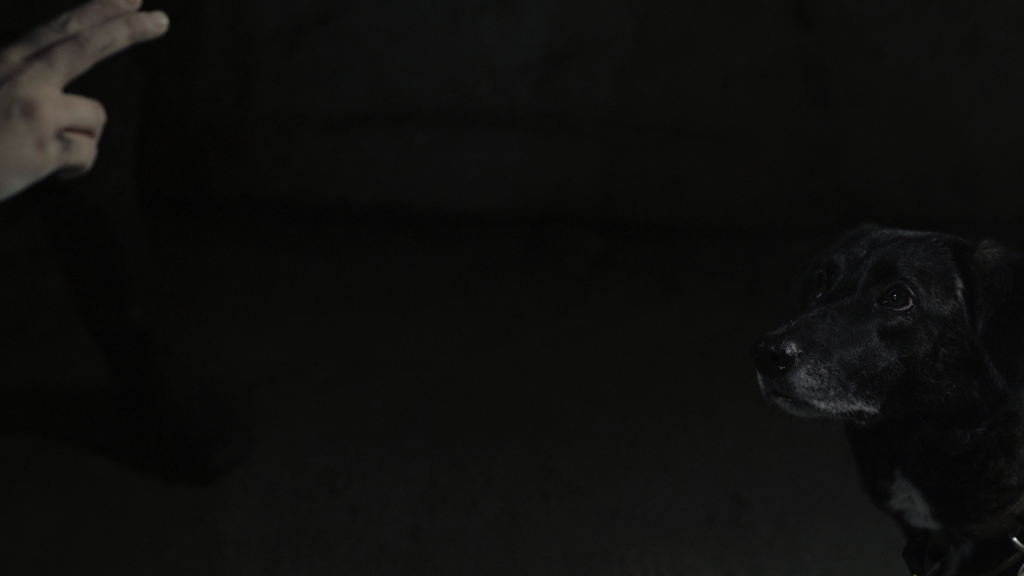
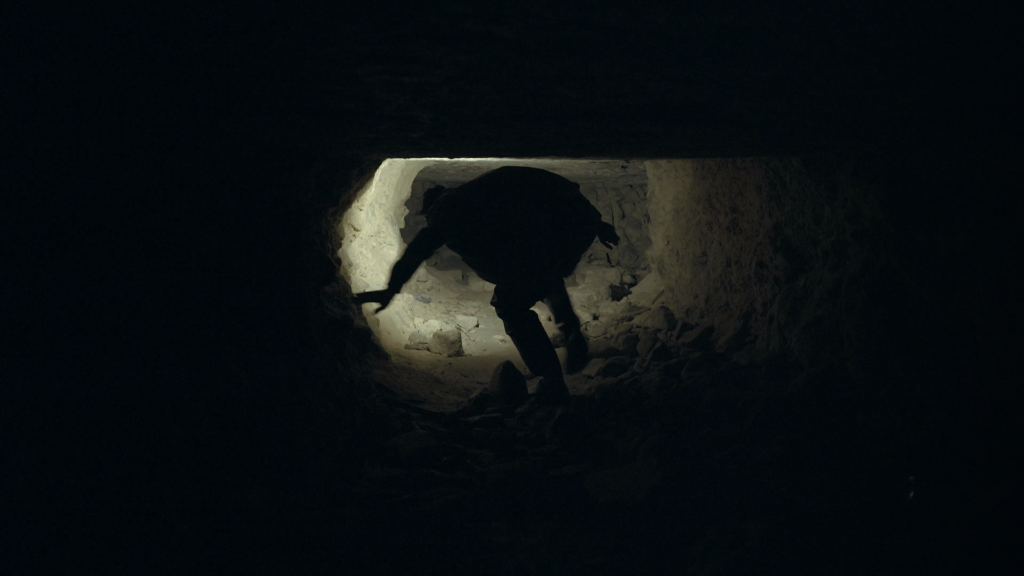
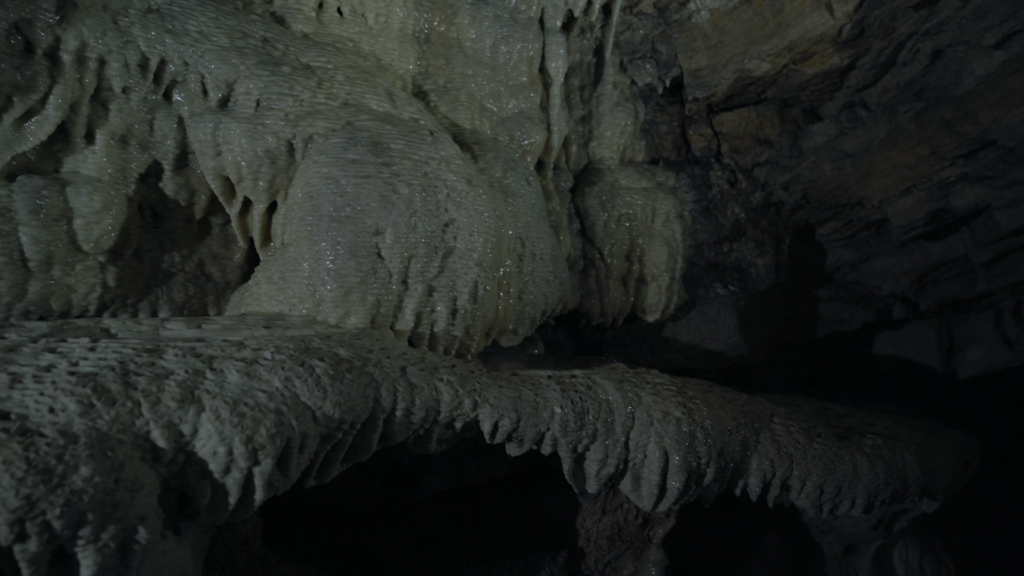
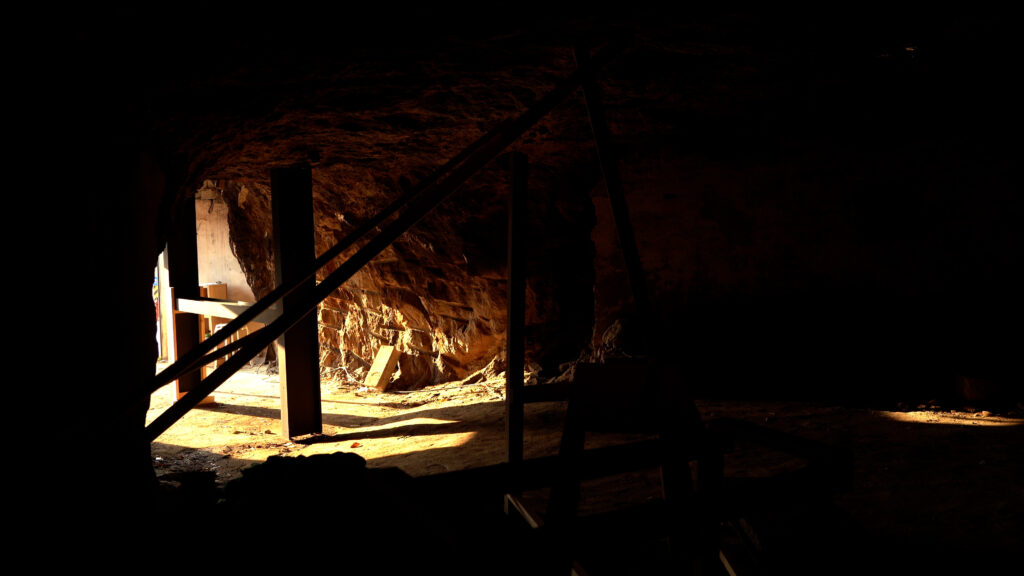
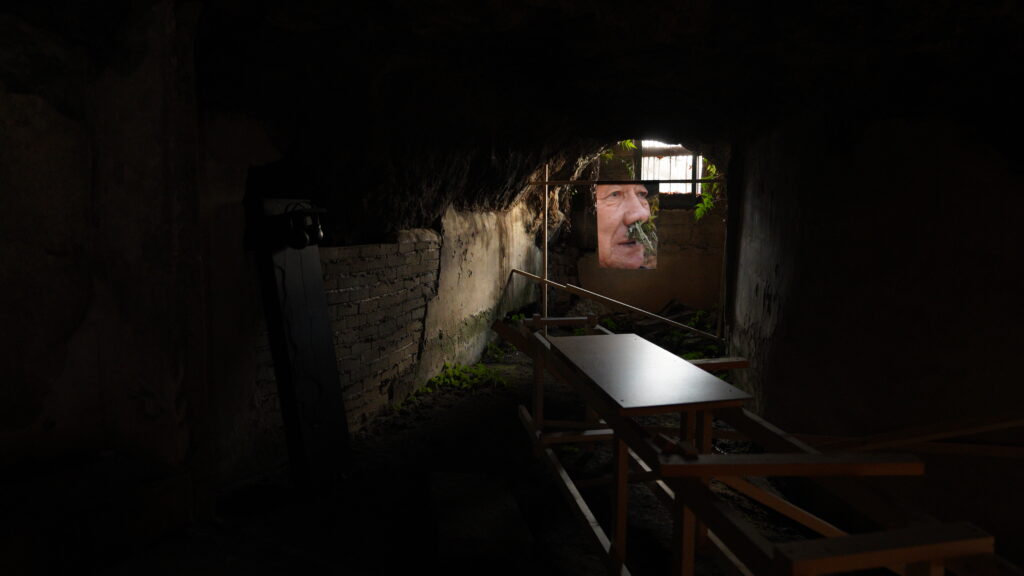
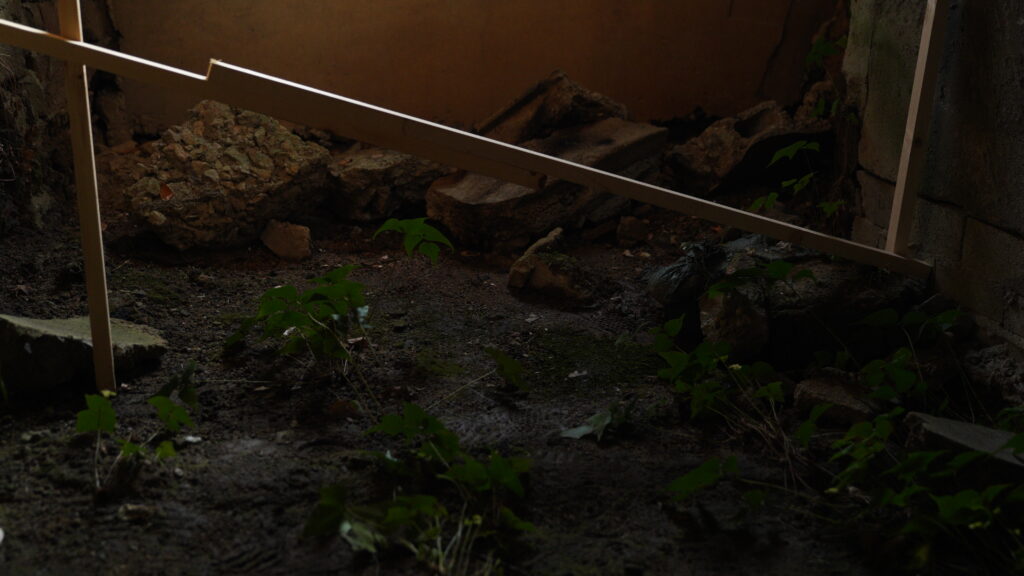
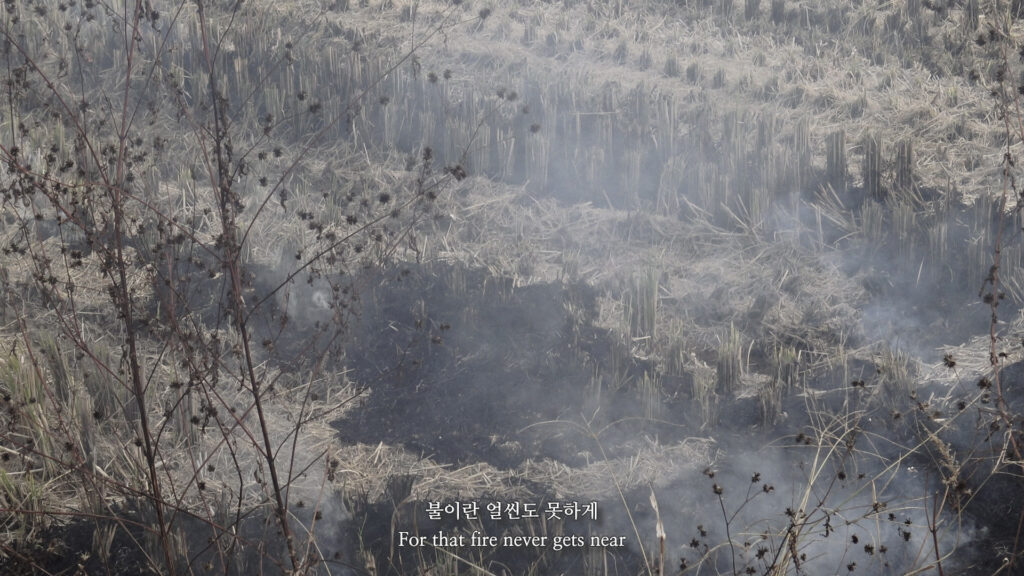
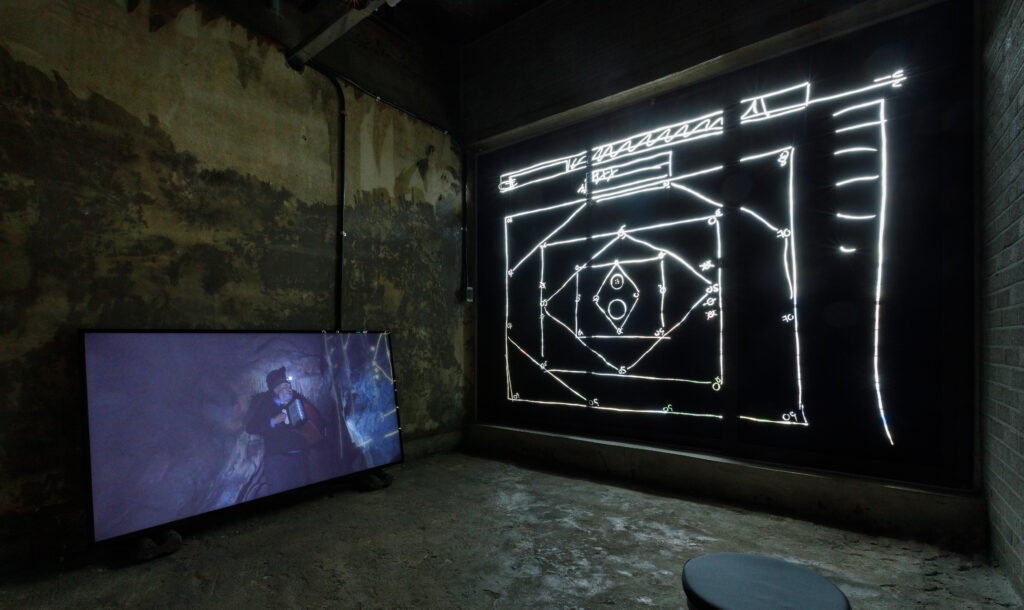
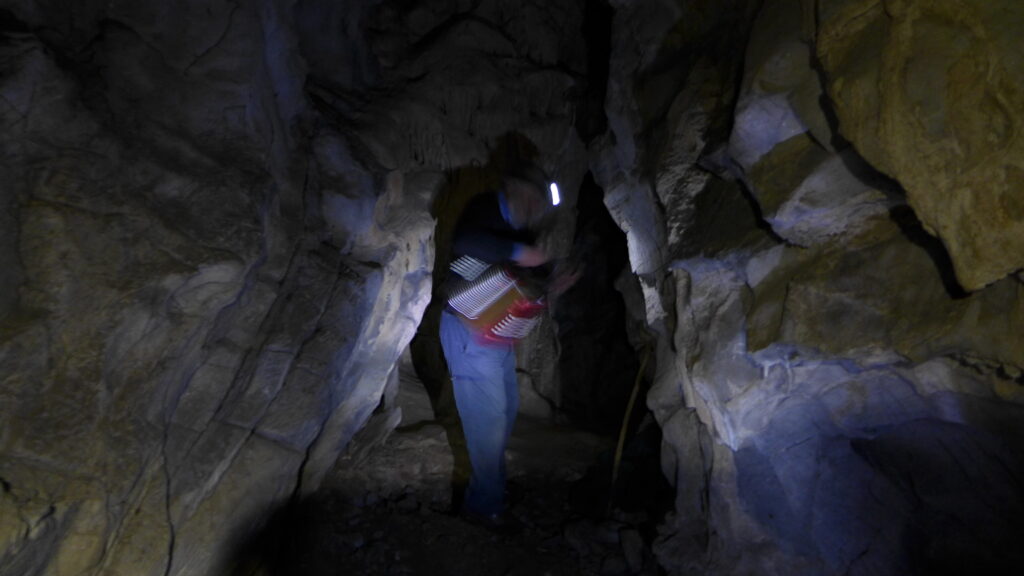
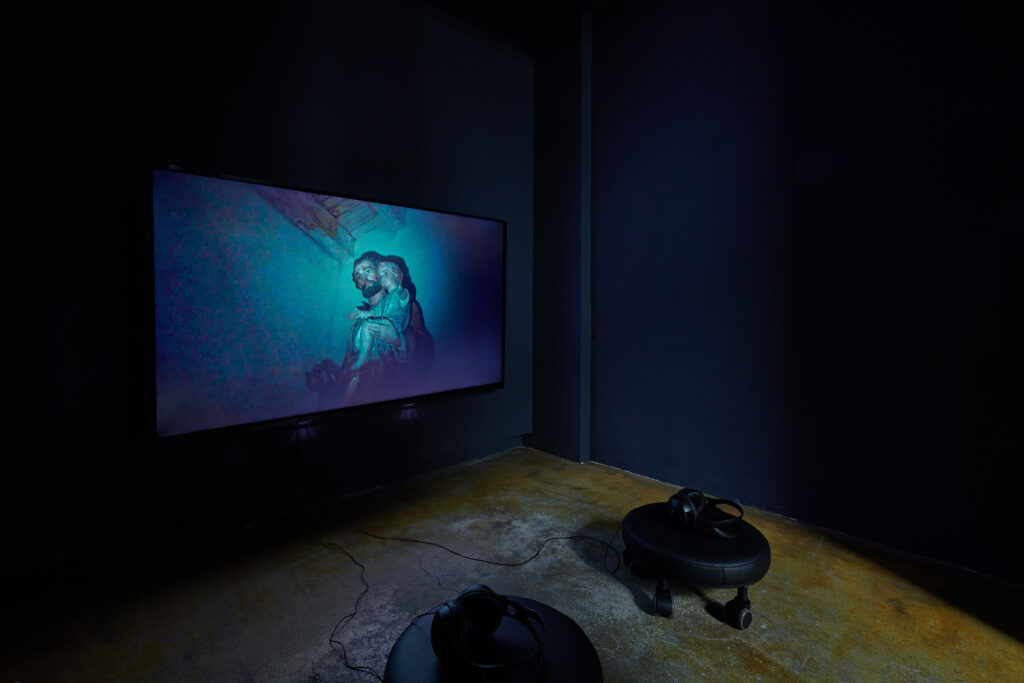
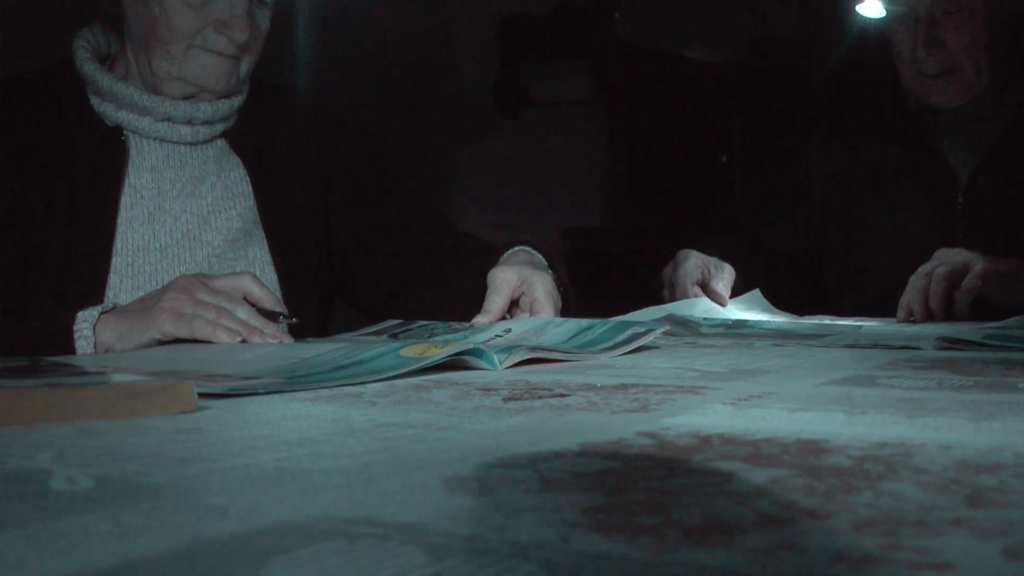
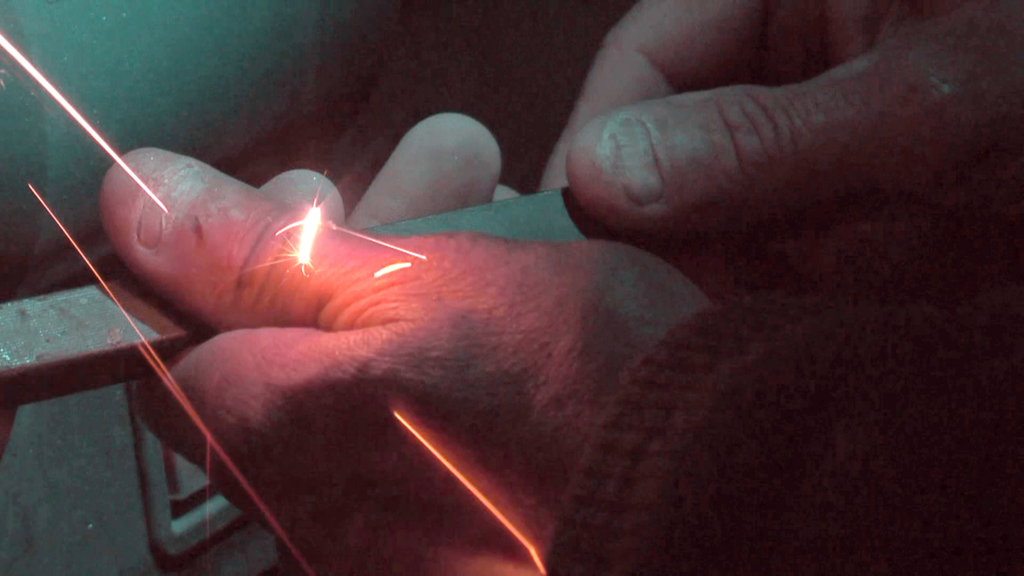
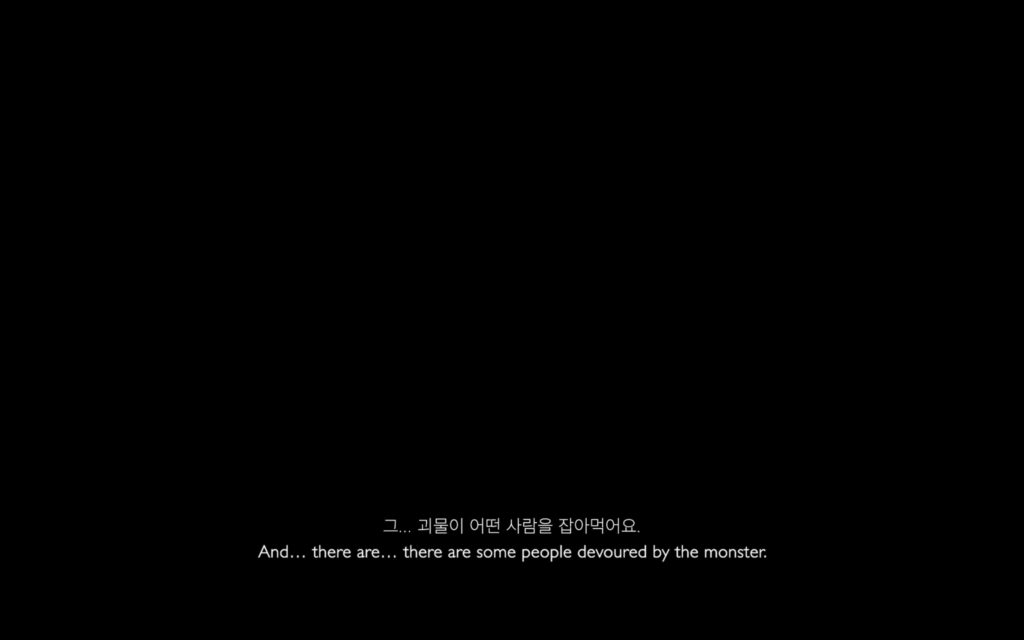
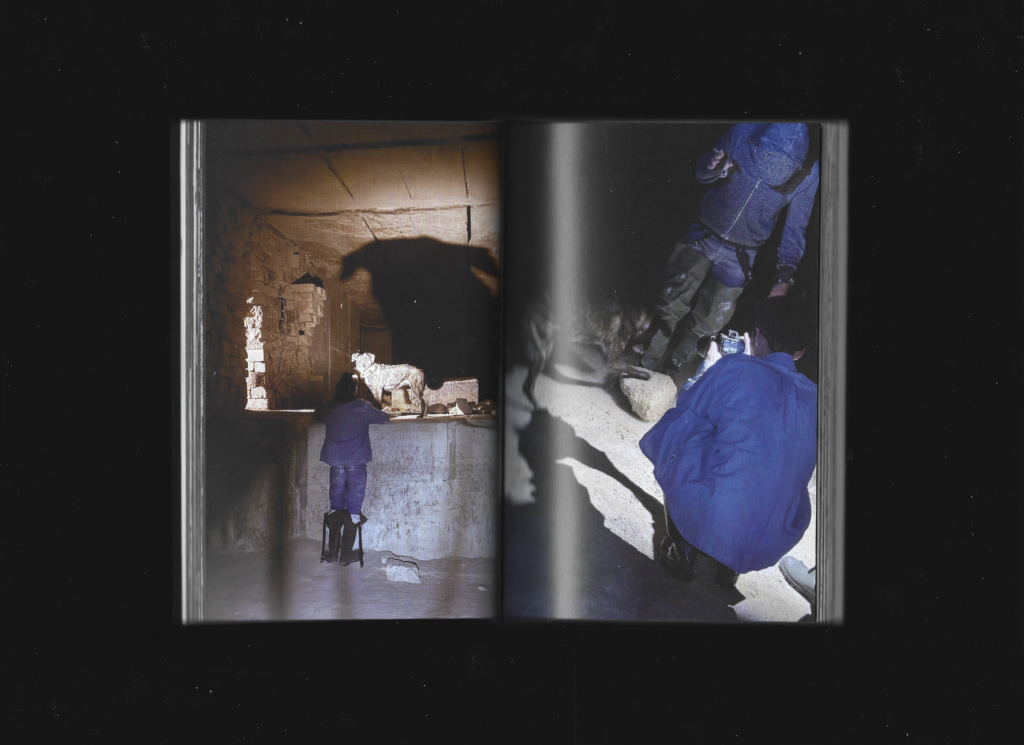
KATA는 ‘아래로부터의 역사(History from below)’라는 작가의 창작 방법론에서 ‘아래’를 계층적 차원의 것이 아니라 지리적 차원의 것으로 오독하면서 지하 세계의 아름다움을 찾아본다. KATA: Bonne descente는 ‘수셰’, ‘코르베’, 그리고 그들의 반려견 ‘베르타’로 이루어진 한 가족의 하강을 쫓아, 카타필(Cataphile) 공동체가 재구축한 비공식 카타콤으로 우리를 인도한다. 동시에 지상의 시스템으로는 이해하거나 감각할 수 없는 순간들을 이야기로 펼쳐 보이며, 이 모든 것이 ‘불법’이라는 경계를 넘어야만 포착된다는 아이러니를 드러낸다.
KATA seeks the beauty of the underground world by deliberately misreading the “below” in the artist’s methodology of History from Below not as a hierarchical position, but as a geographical one. KATA: Well descent follows the descent of a family consisting of Souchet, Corvée, and their companion dog, Bertha, guiding us into the unofficial catacombs reconstructed by the Cataphile community. At the same time, it unfolds narratives of moments that cannot be understood or sensed through the systems of the surface world, revealing the irony that such moments can only be captured by crossing the boundary of what is deemed “illegal.”

PREV
NEXT

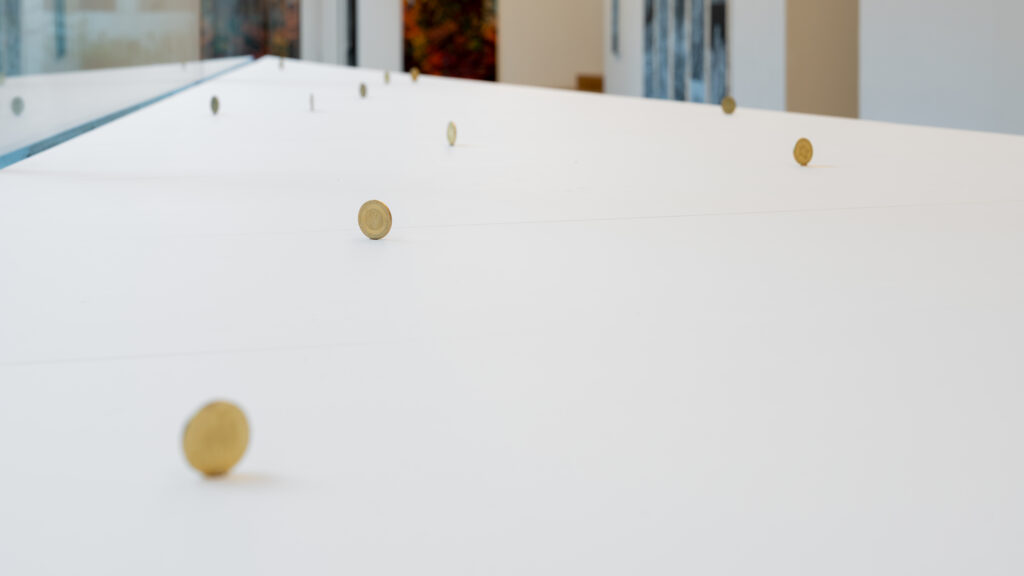
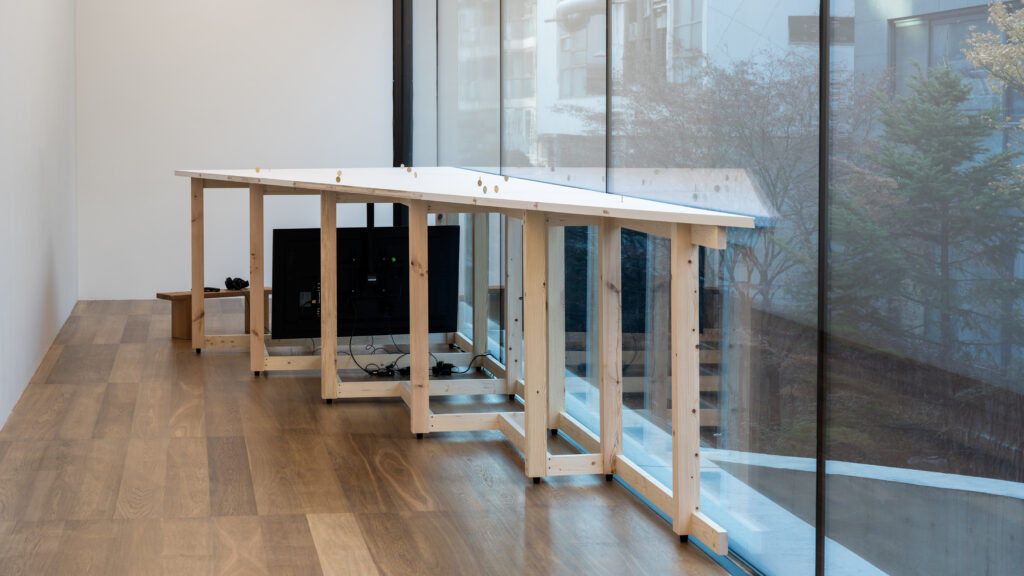
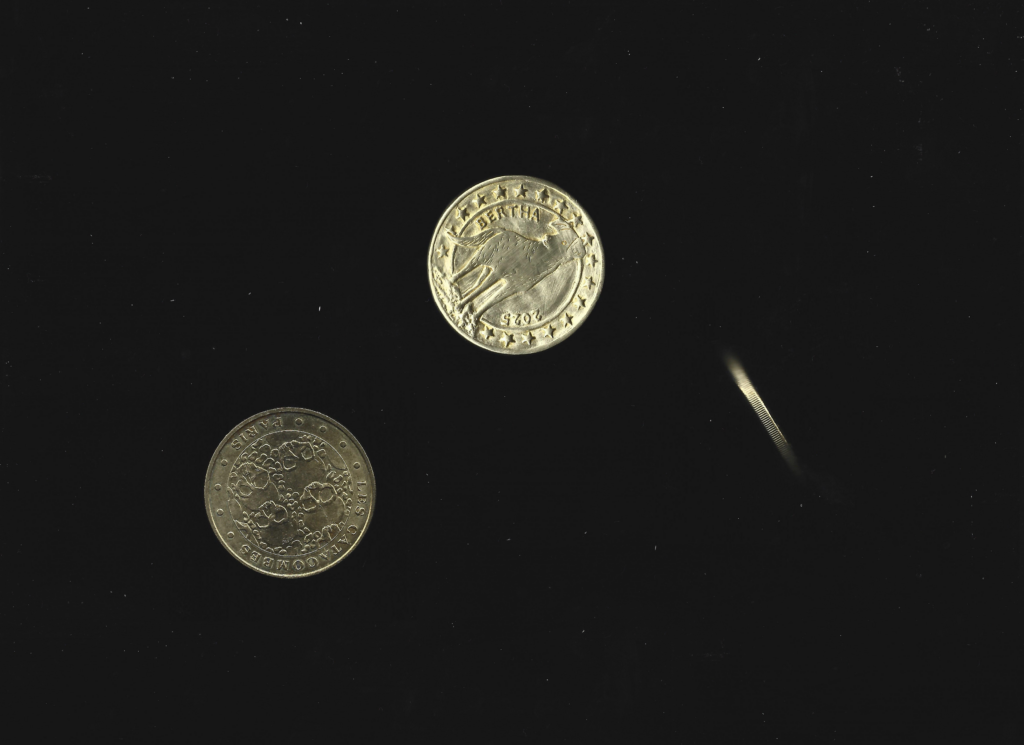
KATA: 베르타의 트락|KATA: Bertha’s Tract|13 coins|diameter 34mm, thickness 2.5mm|2025

KATA: 베르타의 트락
KATA: Bertha’s Tract
13 coins|diameter 34mm, thickness 2.5mm|2025

Coin DesignㅣYoungchan Ko
Coin FabricationㅣCosmoclé
Coin Collection AssistanceㅣJuhye Park
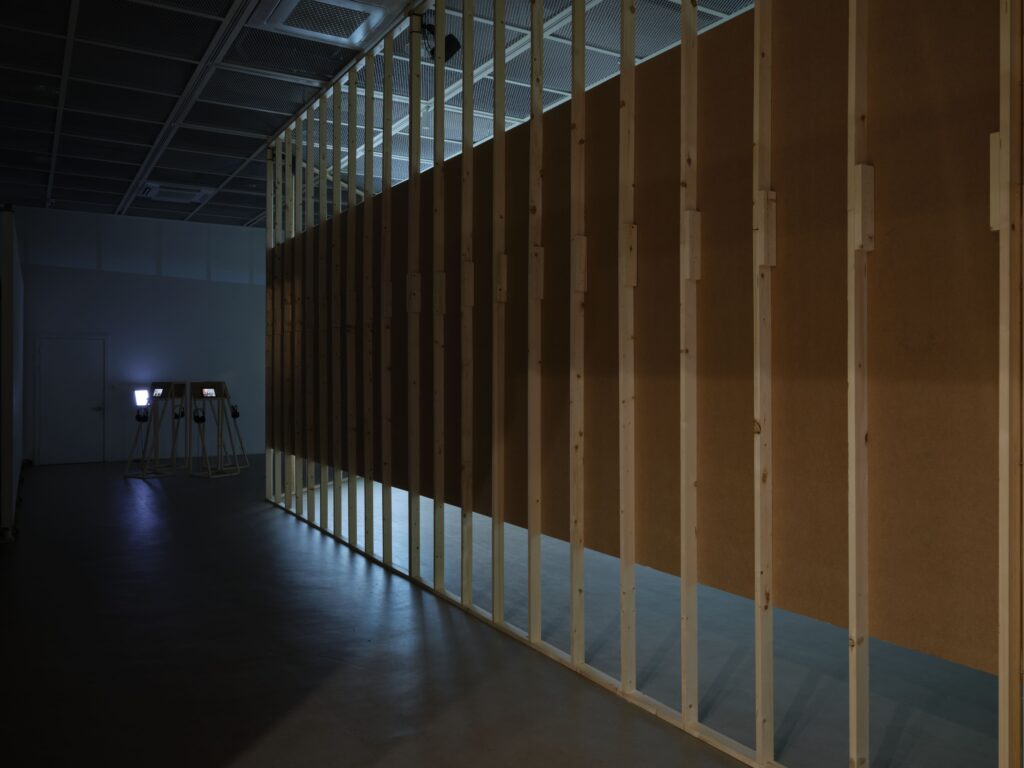
Installation DesignㅣKim Sim Jung
Installation FabricationㅣSogeum Workshop

Slide 1-2
© SONGEUN Art and Cultural Foundation and the Artists. All rights reserved.
Photo: STUDIO JAYBEE


KATA: 베르타의 트락은 베르타를 기념하기 위해 제작한 주화와 파리 조폐청에서 발행된 기념 주화의 집합으로, 자신의 상징물을 만들어 장소 곳곳에 숨기고 찾는 카타필의 ‘트락(Tract)’ 문화를 참조한다.
KATA: Bertha’s Tract consists of coins made in memory of Bertha alongside commemorative coins issued by the Paris Mint, referencing the Cataphiles’ “Tract” culture of creating symbolic objects and hiding them throughout the site.

PREV
NEXT

애프터랜드|Afterland|four-channel video|22′ 41″|2024

애프터랜드
Afterland
four-channel video|22′ 41″|2024

Director & Writer | Boram Lim, Youngchan Ko
Producer | Boram Lim
Cinematography | Youngchan Ko
Voiceover | Kotoko Watanabe
Sing | Kotoko Watanabe
Featuring | Ichiko Watanabe, Junghwa Ko
Location Coordinator | Keiko Kuroda, Hironori Ogata
Title Design(Typography) | Studio Oblique
Sound Design | Jungsang-in
Sound Mixing & Mastering | Bozar Boonsik
Production Advisor | Kearnhyung Ahn
Translation | Boram Lim

Thanks to
Sungwang Ko, Miyoun Park(BCT), Aki’s bicycle, Jongsook Yang, Takeshi Omoki(Omoken Park), Seil Oh, Keita Watanabe, Kotoko Watanabe, Mai Watanabe, Dowool Lim, Uihaeng Chung, CHIKAKEN Products Co.,Ltd


죽음이 현실이 되는 장소들이 있다. 애도가 유예된 장소들이 있다. 과거의 시간이 현재의 시간에 흐르는 장소들이 있다. 나는 여기서 그러한 장소들을 환기하고 싶다. 비단 전쟁이나 자연 재해 뿐만 아니라 인류는 자본주의, 내셔널리즘, 자원 개발, 도시 환경과 생태 등 여러 가지 이념으로 장소의 의미를 재고하면서 상실의 장소를 탄생시킨다. 이러한 상실의 장소에서 애프터랜드가 탐구하는 것은 장소의 기억과 그 ‘사후성’이다. 애프터랜드는 두 개의 서로 다른 장소를 배경으로 하여 그곳에서 일어난 ‘사건’과 그 사건 속에서 ‘상실’을 겪은 사람들, 그리고 격변하는 운명의 땅이 과거로부터 현재까지 창조와 파괴의 순환 속에서 어떠한 시간을 품고 기억을 전해왔는지, 지역 리서치를 기반으로 수집한 자료를 재구성하여 창작한 이야기다.

임보람의 글 ‘이후의 땅, 이후의 삶’에서 발췌.

*애프터랜드는 임보람 기획자와 고영찬 작가의 협업프로젝트입니다.

There are places where death becomes reality. Places where mourning is deferred. Places where past time flows into the present. Here, I want to evoke such places. Not only through war or natural disasters, but humanity continuously redefines the meaning of places through various ideologies—capitalism, nationalism, resource development, urban environments, and ecology—giving birth to places of loss. What Afterland explores in these places of loss is the memory of the place and its “afterness.” Set against two different locations, Afterland reconstructs and creates a story based on local research, focusing on the “events” that occurred there, the people who experienced “loss” within those events, and how these lands of turbulent fate have held time and passed on memories through cycles of creation and destruction from the past to the present.

Excerpt from Boram Lim’s essay “Afterland, Afterlife”

Afterland is a collaborative project between curator Boram Lim and artist Youngchan Ko.

PREV
NEXT

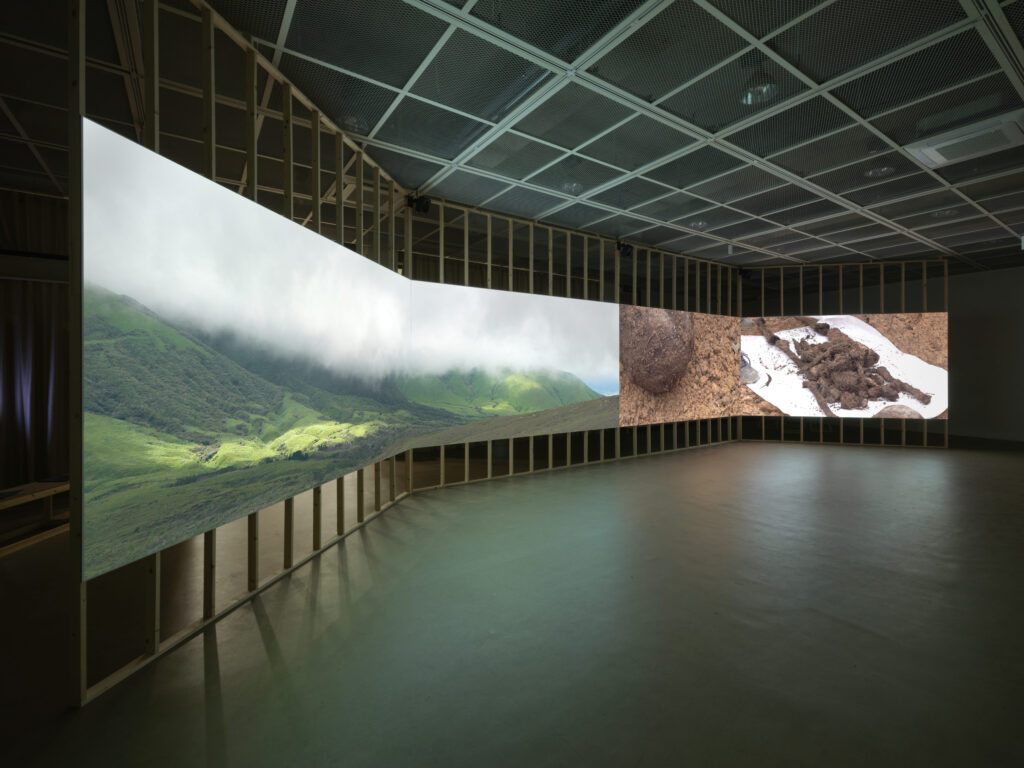
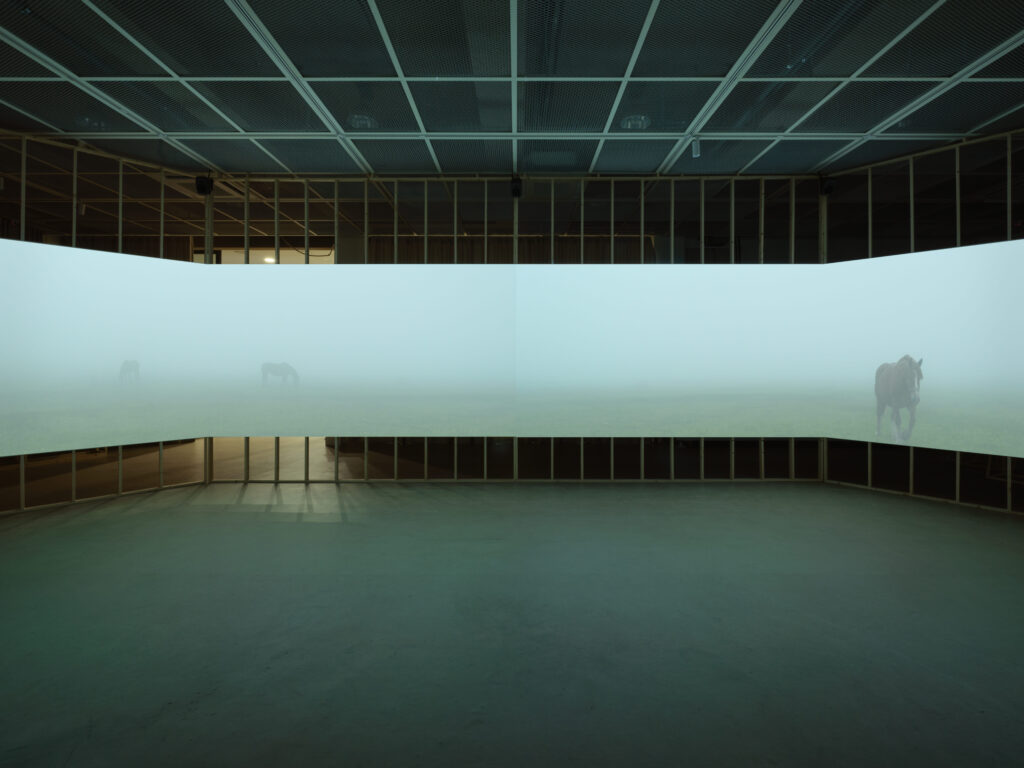
바다위의 에덴|Eden at Sea|two-channel video|10′ 55″|2024

바다위의 에덴
Eden at Sea
two-channel video|10′ 55″|2024

Director & Writer | Youngchan Ko
3D Scanning | Youngchan Ko
3D Modeling | Jema Lee
Motion Graphics | Jema Lee
Sound | Murphy Yum
Performer | Sungwang Ko
Script Advisor | Suji Park
Translation | Suji Park
Installation DesignㅣKim Sim Jung
Installation FabricationㅣSogeum Workshop

Thanks to
Junghwa Ko, Jongsook Yang


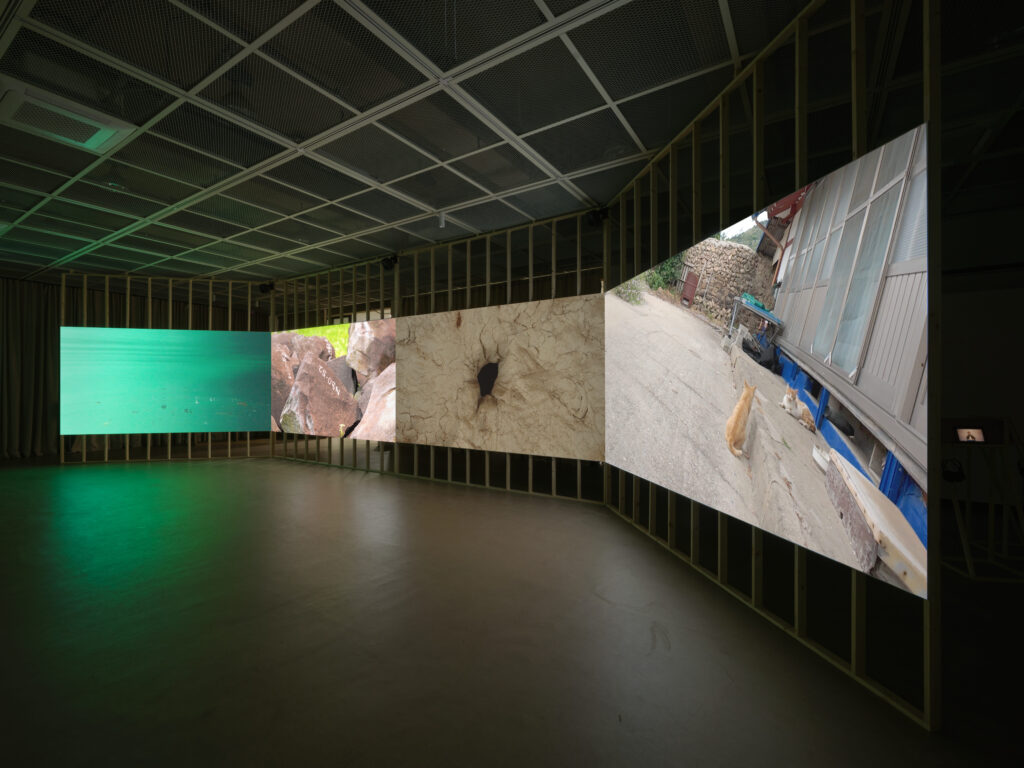
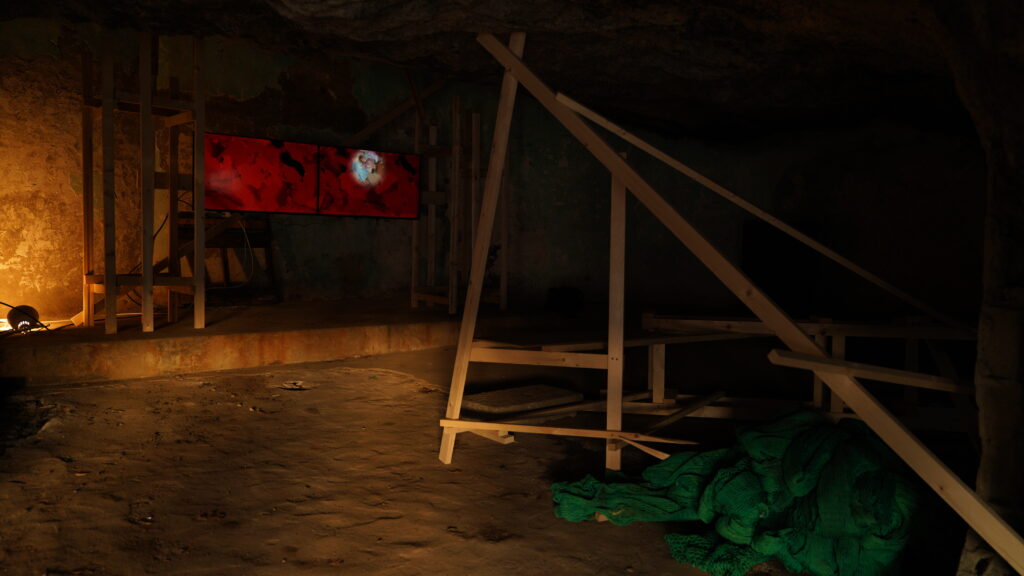
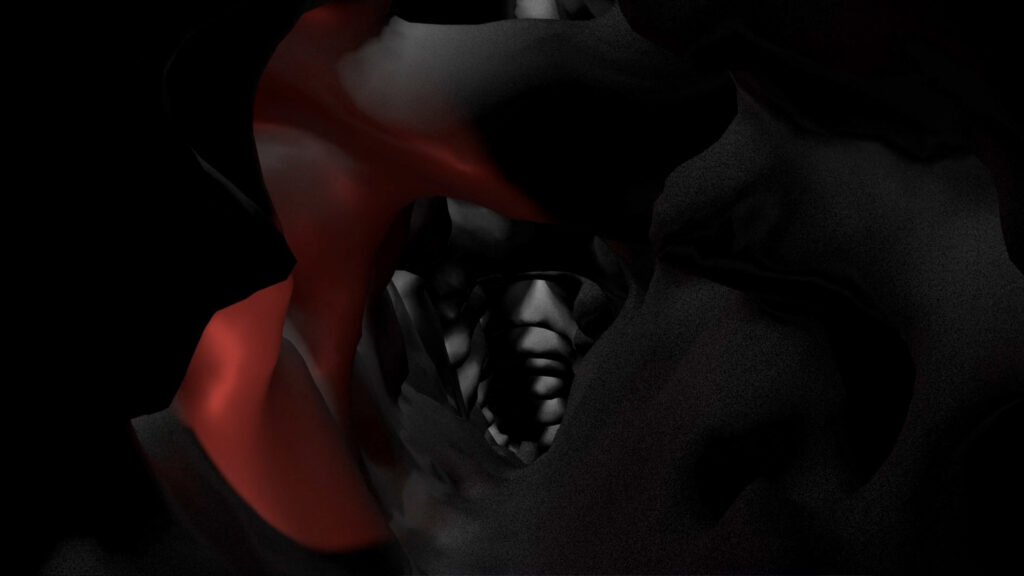
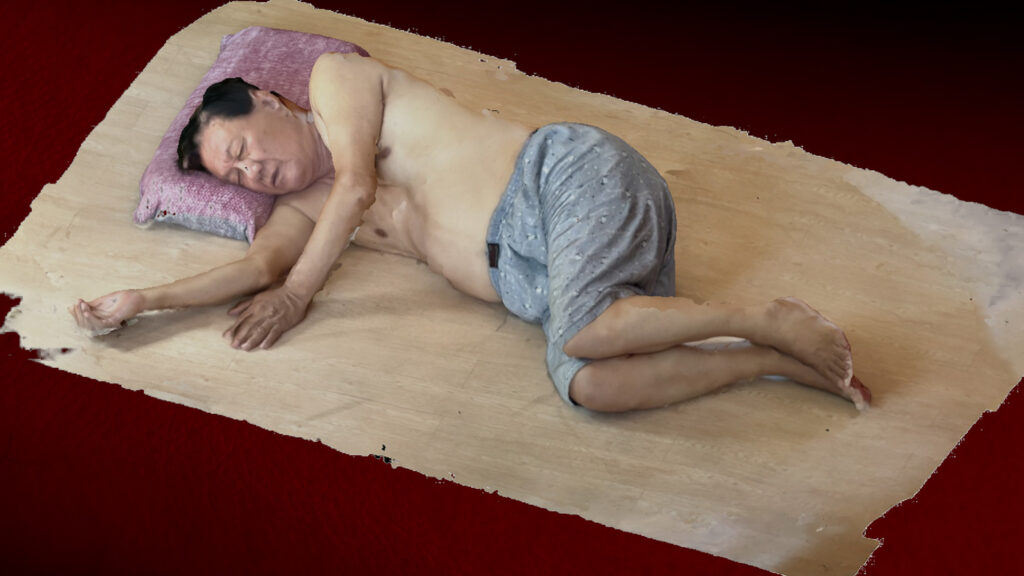
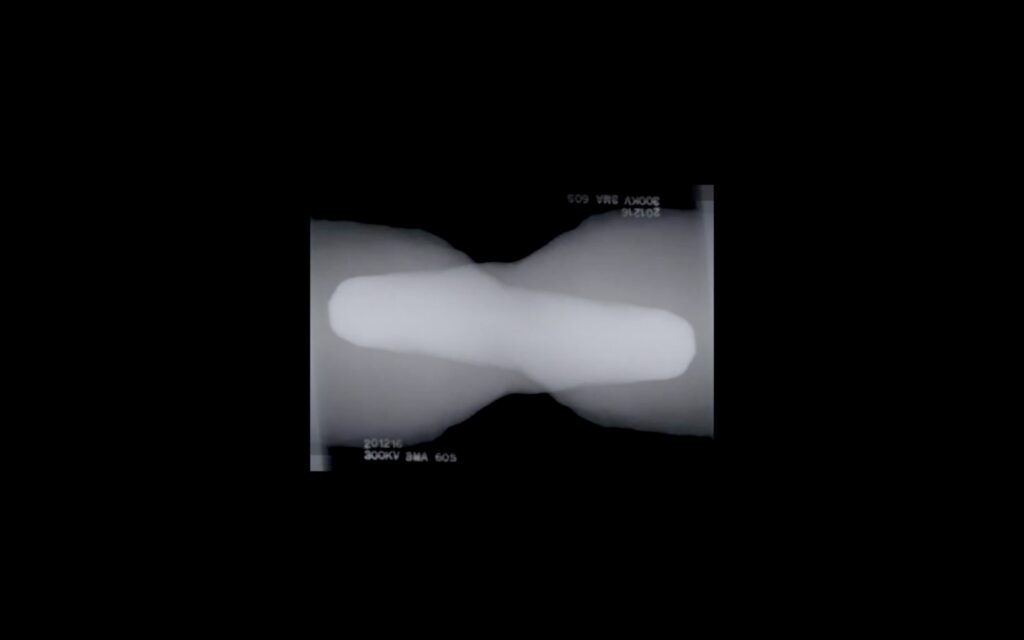
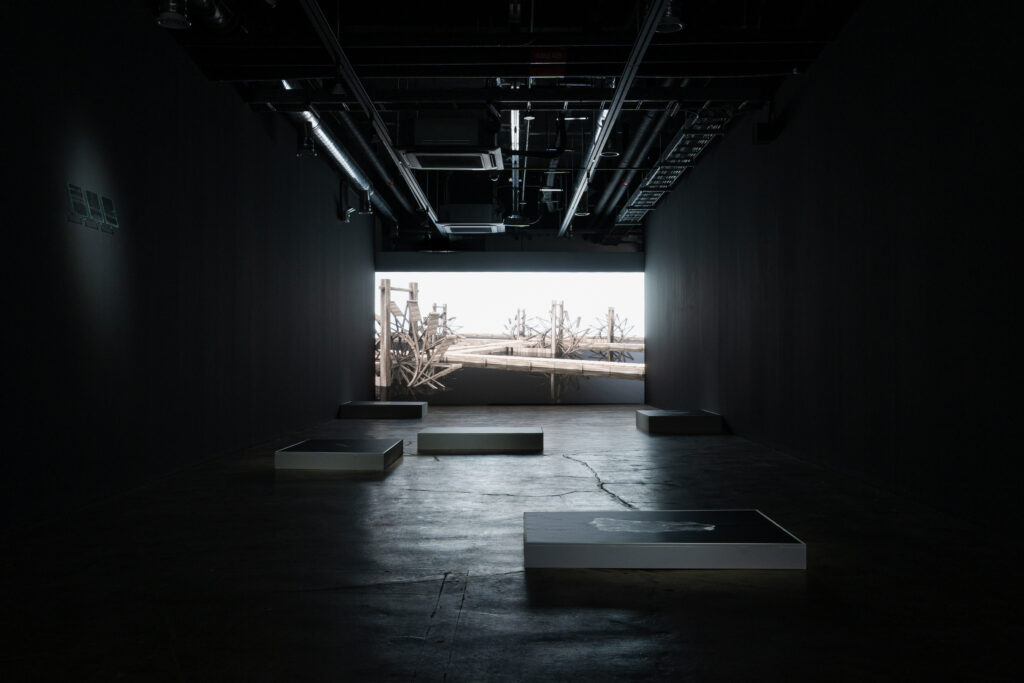
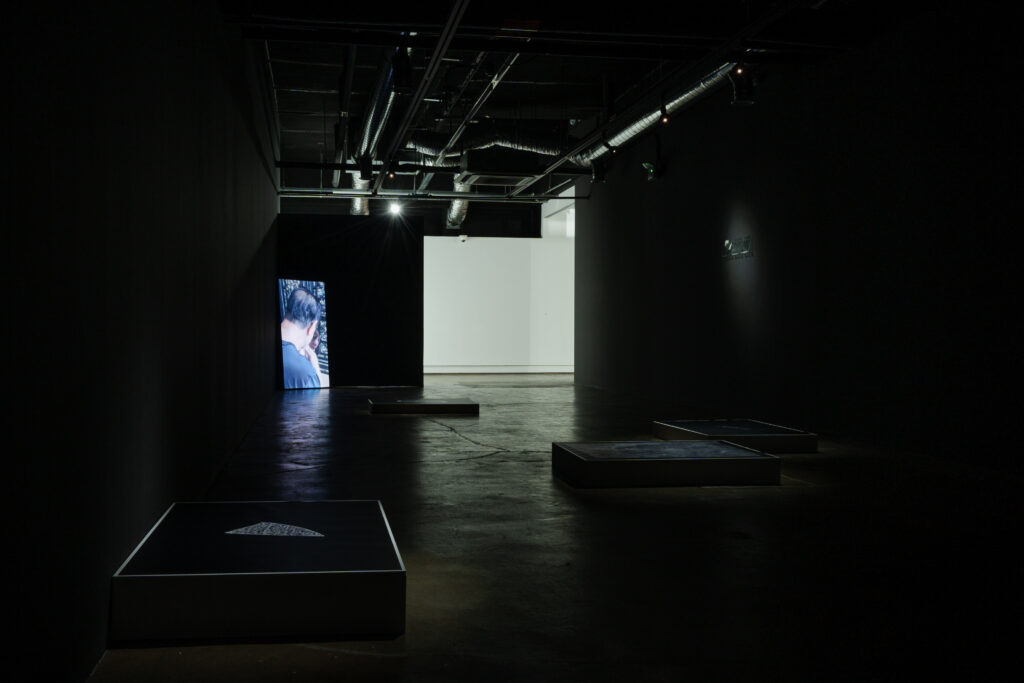
바다위의 에덴은 ‘사파리가 될 운명을 부여받은 섬’의 근미래를 현재의 관점에서 상상해 보는 것을 골자로 한다. 영상은 무위자연을 꿈꾸며 섬에 자발적으로 고립된 노년 남성을 동물의 한 종(種)으로 바라보며, 욕망과 현실이 엉겨 붙은 기이한 세계 속으로 탐사를 시작한다. 녹이쓴 미래와 삐그덕거리는 3D이미지는 우리를 지리적, 신체적 애수와 아름다움으로 안내한다.
Eden at Sea centers on imagining the near future of an island “destined to become a safari,” viewed from the perspective of the present. The video observes an elderly man, who has voluntarily isolated himself on the island in pursuit of untouched nature, as one species among many—beginning an exploration into a strange world where desire and reality are entangled. A rusted future and creaking 3D imagery guide us through a landscape of geographic and bodily melancholy, and beauty.

PREV
NEXT

신-자연인|New-Homo Natura|Photograph|49.5x70cm|2024

신-자연인
New-Homo Natura
Photograph|49.5x70cm|2024


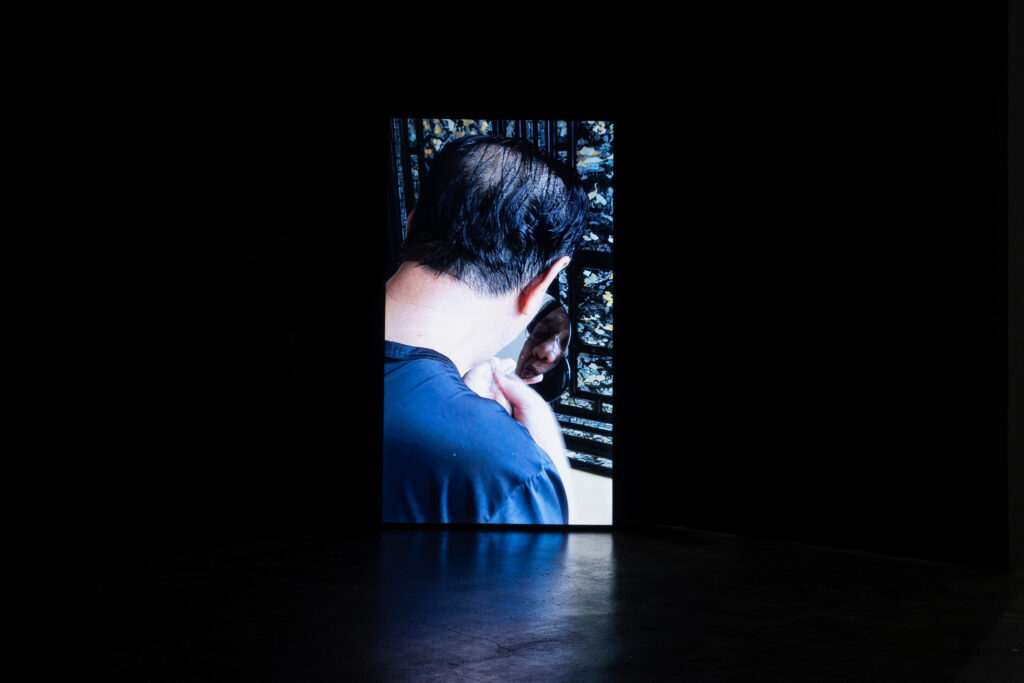
자연 합일을 꿈꾸는 한 노인의 실제 삶은 영상 작품 바다위의 에덴 속 캐릭터와 세계관을 형성하는 중요한 시발점이 되었다. 쑥이 비염을 낫게 해 준다는 맹목적 믿음으로 그의 콧구멍에 새롭게 이식된 풀은 다양한 동식물을 옮겨 와 인공 생태계인 ‘사파리’를 조성하는 아이러니와 닮아 있다.
The real life of an elderly man who dreams of unity with nature became an important point of departure for shaping the characters and worldview of the video work Eden at Sea. Driven by the blind belief that mugwort can cure rhinitis, the newly implanted grass in his nostrils mirrors the irony of creating an artificial ecosystem called “Safari,” where a variety of plants and animals are brought together.

PREV
NEXT

언홈리 아일랜드 주토피아|Unhomely Island Zootopia|Website|2023

언홈리 아일랜드 주토피아
Unhomely Island Zootopia
Website|2023

Web Design | Seunghyo Son
Development | Yeonsu Hwang
Location Coordinator | Sungwang Ko
Sound | Murphy Yum
Installation DesignㅣKim Sim Jung
Installation FabricationㅣSogeum Workshop
Production Advisor | Unsung Yoo

Slide 3
© Mike Korostelev | Exclusivepix Media


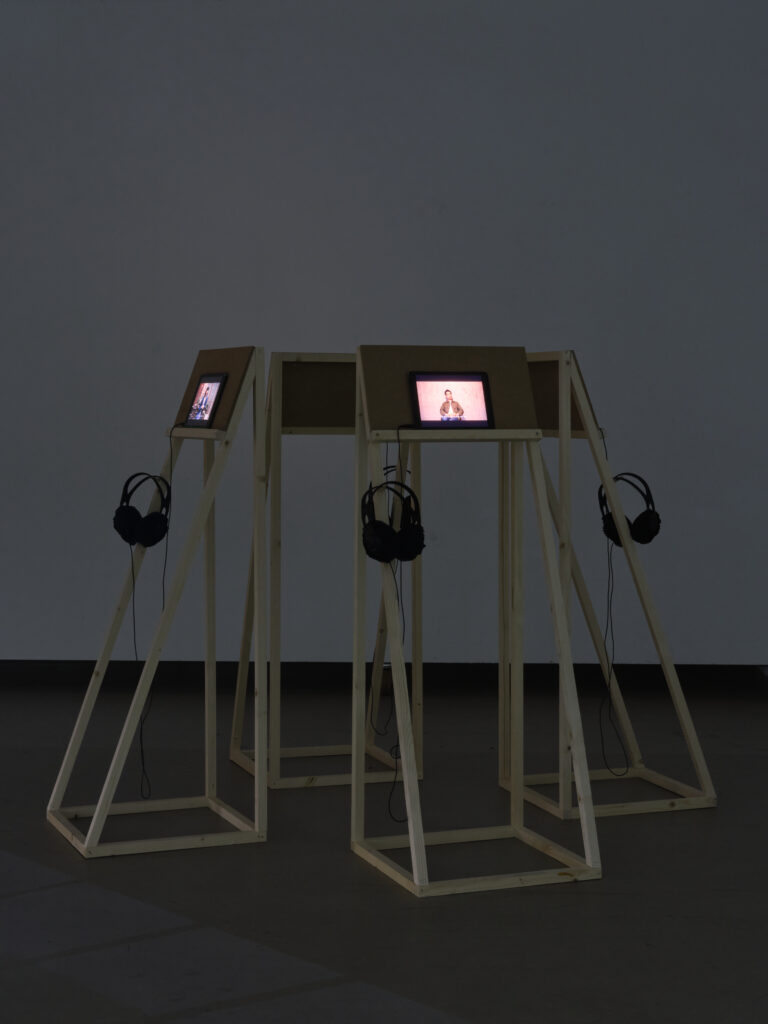
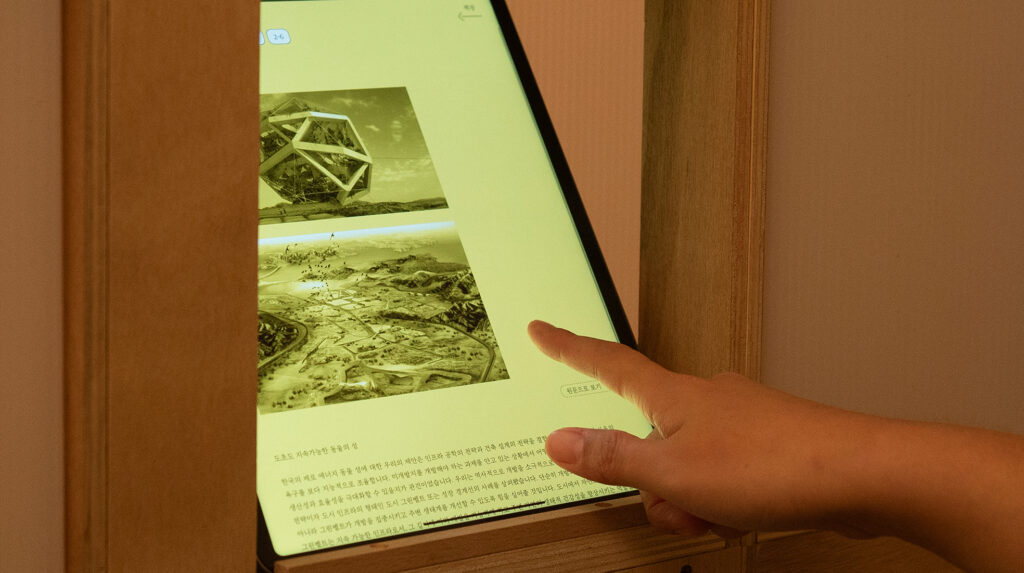
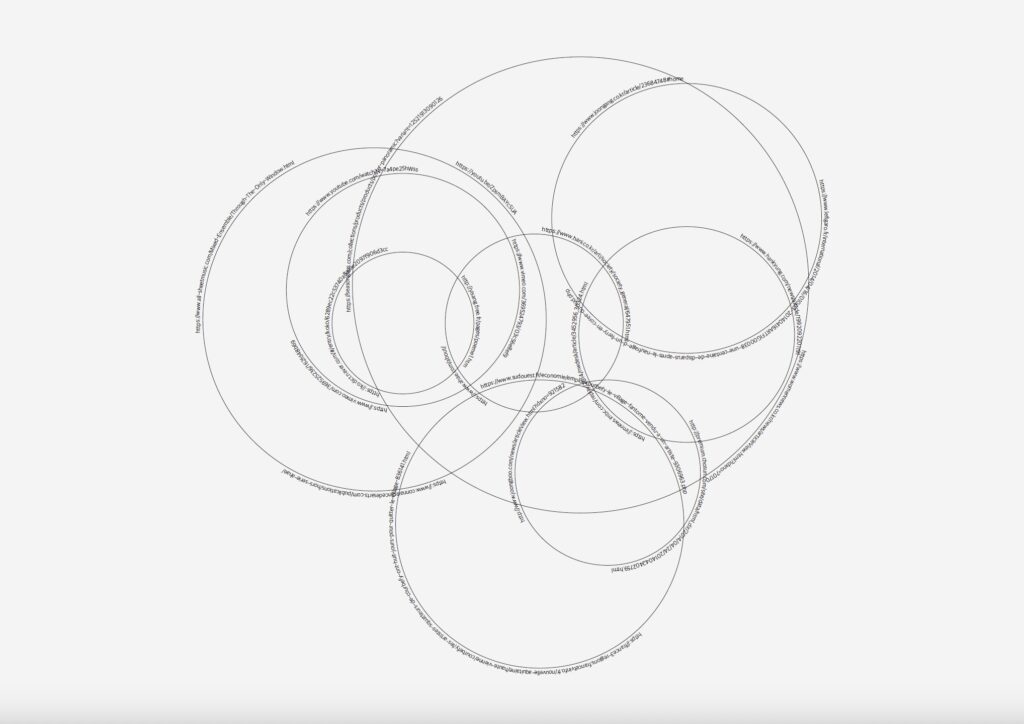
언홈리 아일랜드 주토피아는 웹 형태의 리서치북으로 바다위의 에덴의 밑바탕이 된 데이터의 보고이다. 하나의 작품을 완성하기 위한 사전 조사 자료가 선택적으로 추려지거나 너무 쉽게 증발되지 않도록 ‘리서치’ 그 자체가 하나의 결과물이 되도록 한다. 자료들은 역사 기록, 전설, 인터뷰, 기사, 구전요, 상상과 꿈 등 다양한 층위를 위계 없이 오간다. 방문자들은 서가에 꽂힌 이러한 자료들을 자유롭게 펼치고 훑으며 그들만의 체리피킹(cherry picking)을 수행할 수 있다. 이 과정에서 웹사이트는 아직 현재에 도래하지 않은 미래의 영상 작품을 상상해 볼 수 있는 일종의 ‘예고편’으로 기능한다.
Unhomely Island Zootopia is a web-based research book that serves as a repository of data underlying Eden at Sea. To ensure that the preliminary research for a single work is neither selectively filtered nor too easily forgotten, the research itself is presented as a final outcome. The materials span various layers—historical records, legends, interviews, articles, oral narratives, imagination, and dreams—without imposing any hierarchy. Visitors can open and browse these documents as if they were pulling books from a shelf, engaging in their own form of cherry-picking. In this way, the website functions as a kind of “trailer” that allows users to imagine a future video work that has not yet arrived in the present.

PREV
NEXT

티끌모아|Gathering Tickle|Mixed Media|Variable Dimensions|2022

티끌모아
Gathering Tickle
Mixed Media|Variable Dimensions|2022


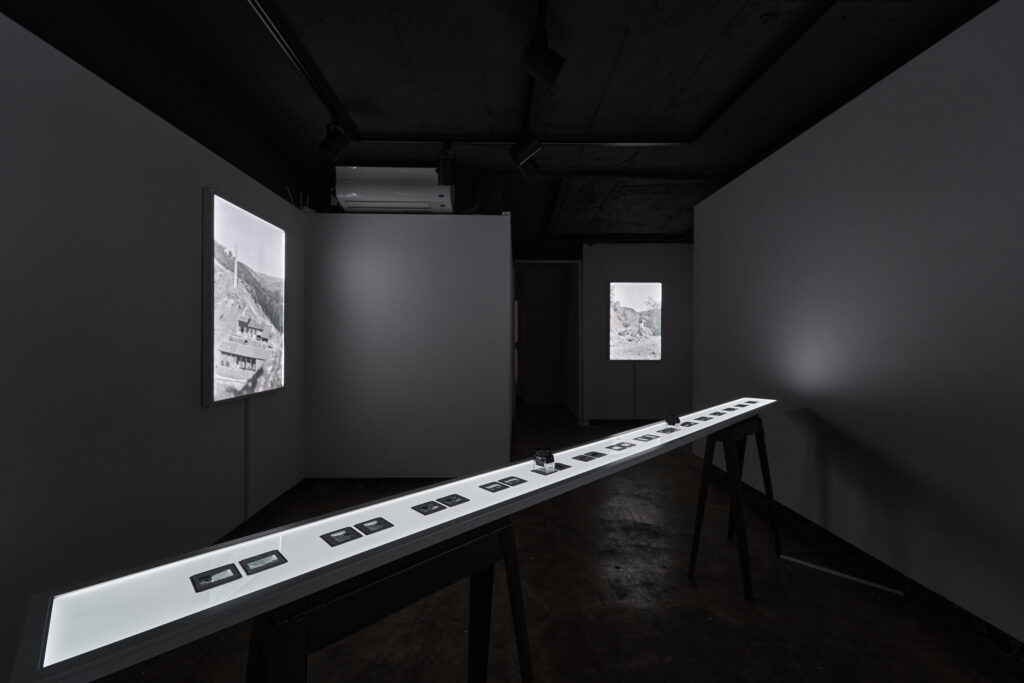
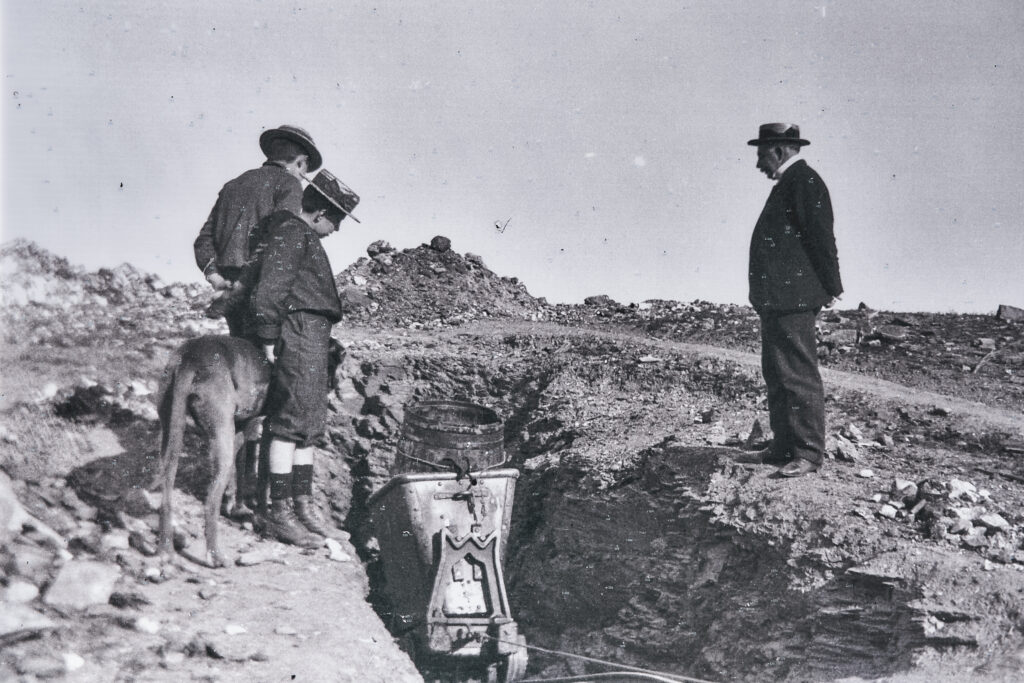
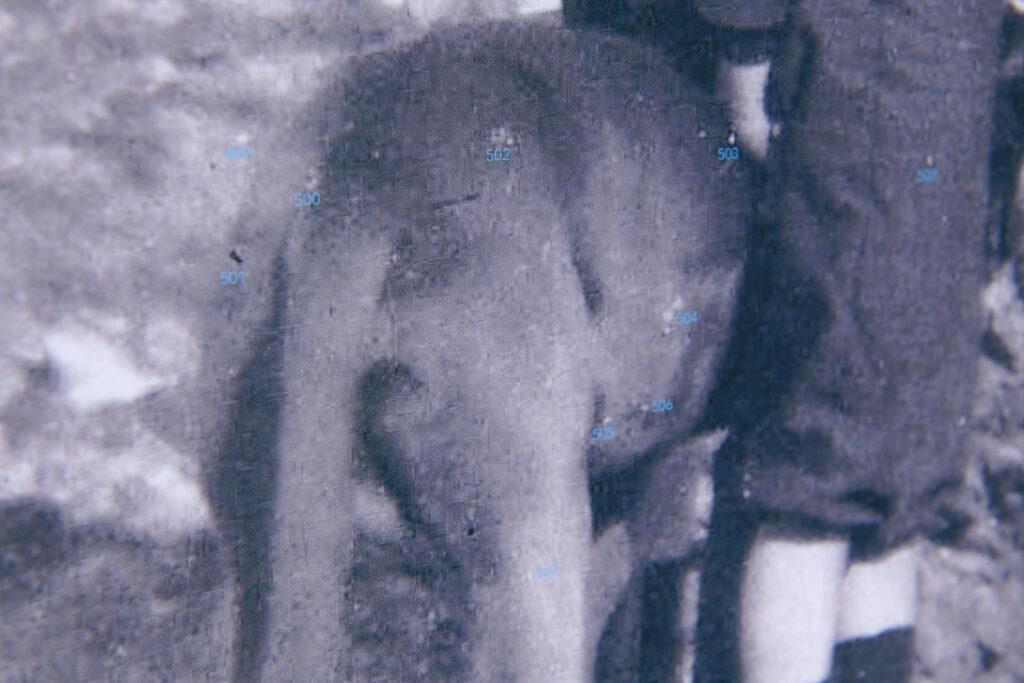
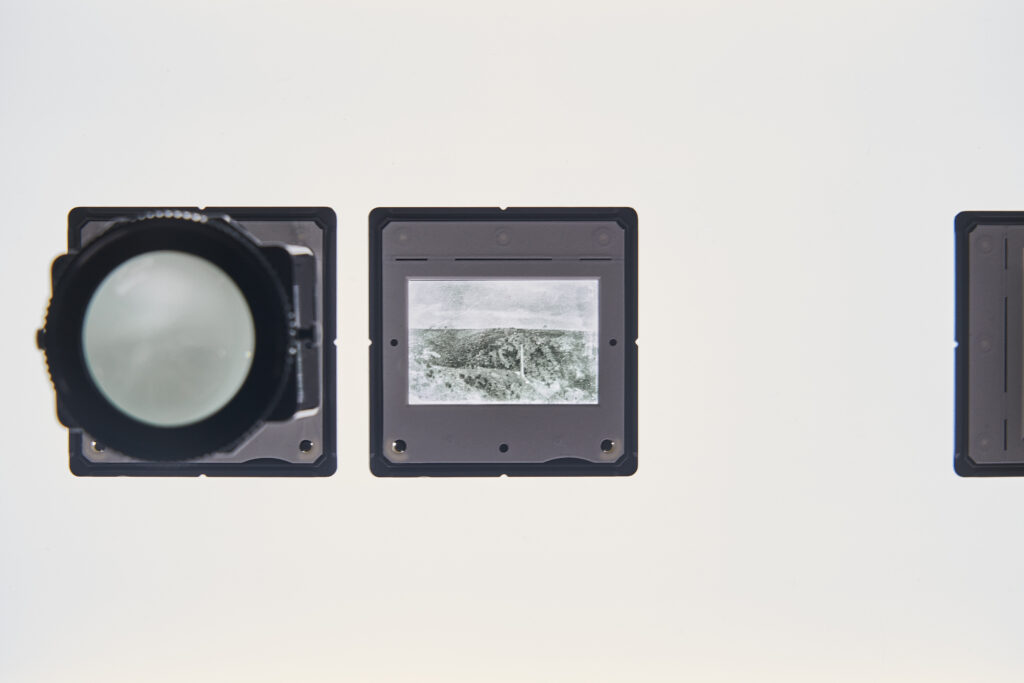
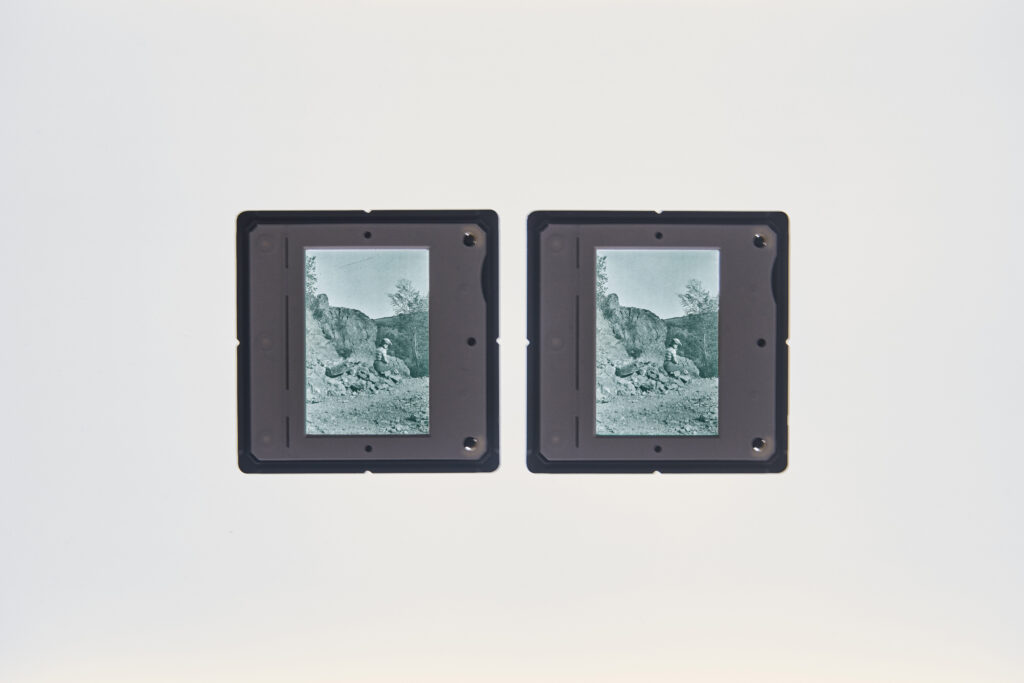
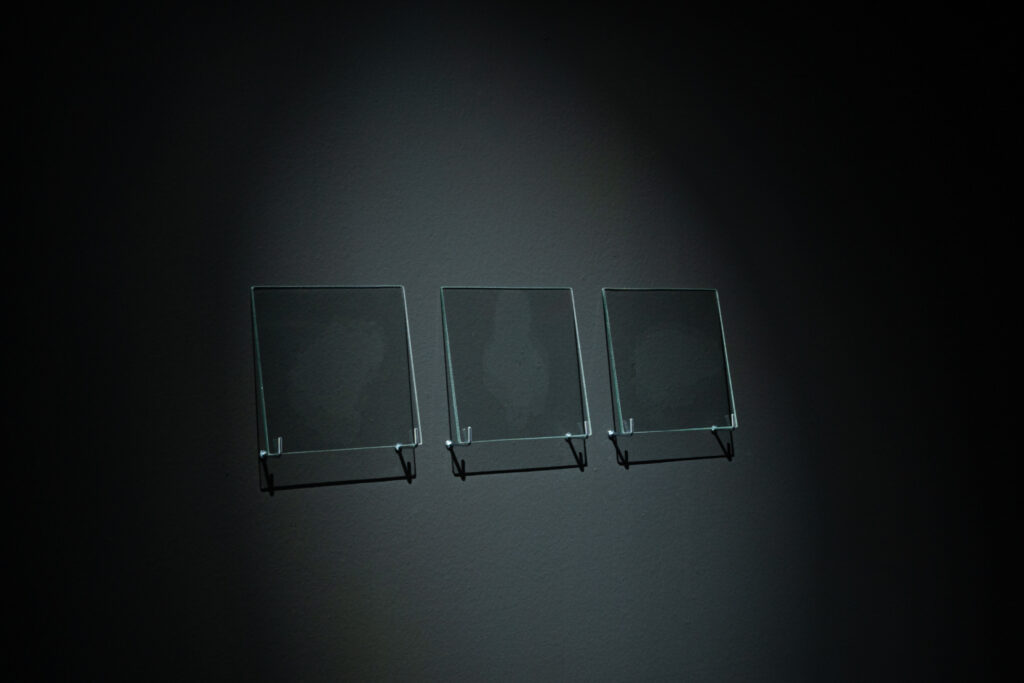
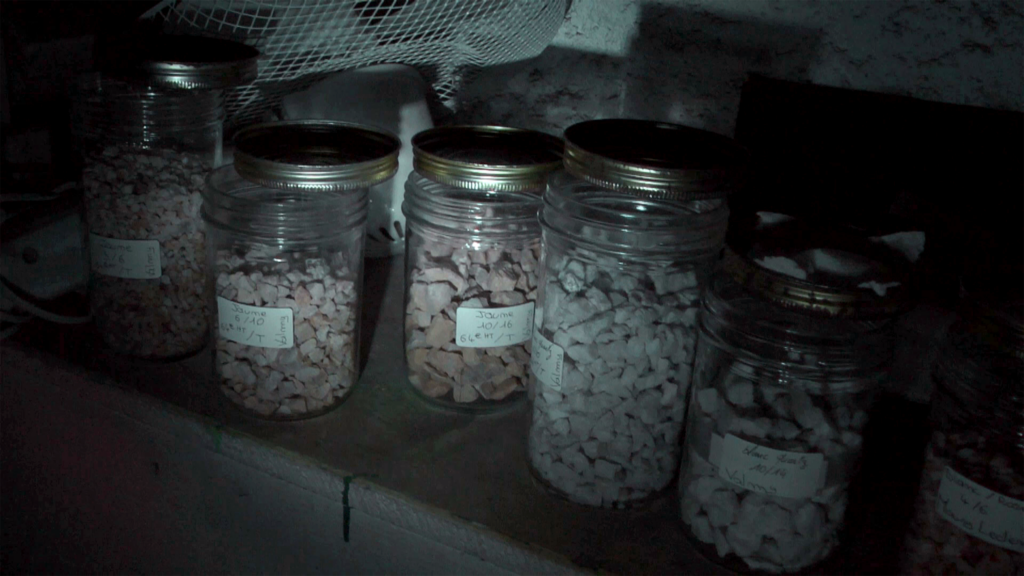
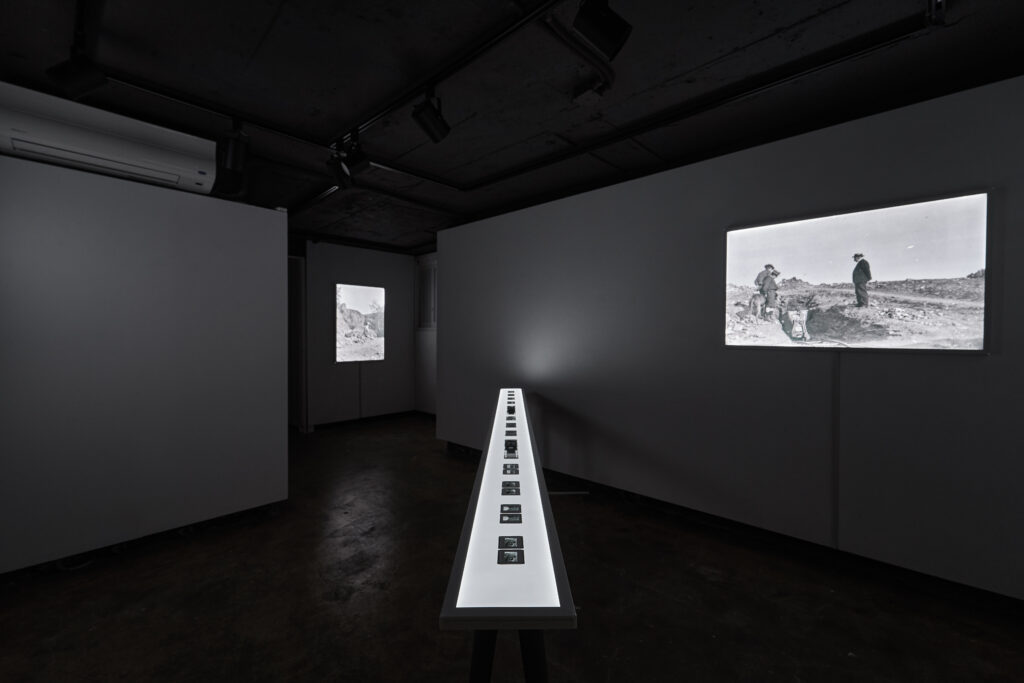
티끌모아는 광산 마을이라는 장소성과 이곳을 기록한 포토샵 전과 후로 쌍을 이루어 존재하는 아카이브 사진에서 발견되는 알갱이 사이의 관계를 탐구한다. 더 선명하고 깨끗한 기록물을 남기겠다는 명목 하에 디지털화되고 포토샵으로 수정된(주로 사진 표면에 묻은 흔적이나 흑백사진 특유의 알갱이를 지우는) 사진들을 통해 쓸모없거나 사사롭다고 간주되어 삭제되어 버린 것들을 숫자로 호명한다. 아주 미세하여 육안으로 확인 할 수 없거나 쉽게 간과되는 것들이 어렴풋이 사진의 표면에서 만들어낸 맥(脈)을 통해 ‘초미시적 관점으로 바라보기’를 제안한다.
Gathering Tickle explores the spatial identity of a mining village and the relationships between particles found in archival photographs—presented in pairs as “before and after Photoshop” edits. In the name of producing clearer and more pristine records, these photographs have been digitized and retouched—often removing marks on the surface or the distinctive grain of black-and-white film. Through this process, things considered useless or too personal have been erased—but are now recalled and named through numbers. The work proposes a way of “seeing at an ultra-microscopic scale,” tracing the faint veins—like mineral veins in a mine—that are formed by the minute, often invisible details lingering on the surface of the images.

PREV
NEXT

도로리|Dorori|Single-channel Video|30′ 00″|2022

도로리
Dorori
Single-channel Video|30′ 00″|2022

Director & Writer | Youngchan Ko
Cinematography | Youngchan Ko
Sound | Murphy Yum
Sing | Cheolsoo Lee
Translation | Jeongsun Park

Thanks to
Daehyun Jang, Sanghyuk Jin, Jungoo Hwang, Jeonghwa Han, Jaecheol Jeong, Jeongmin Kim


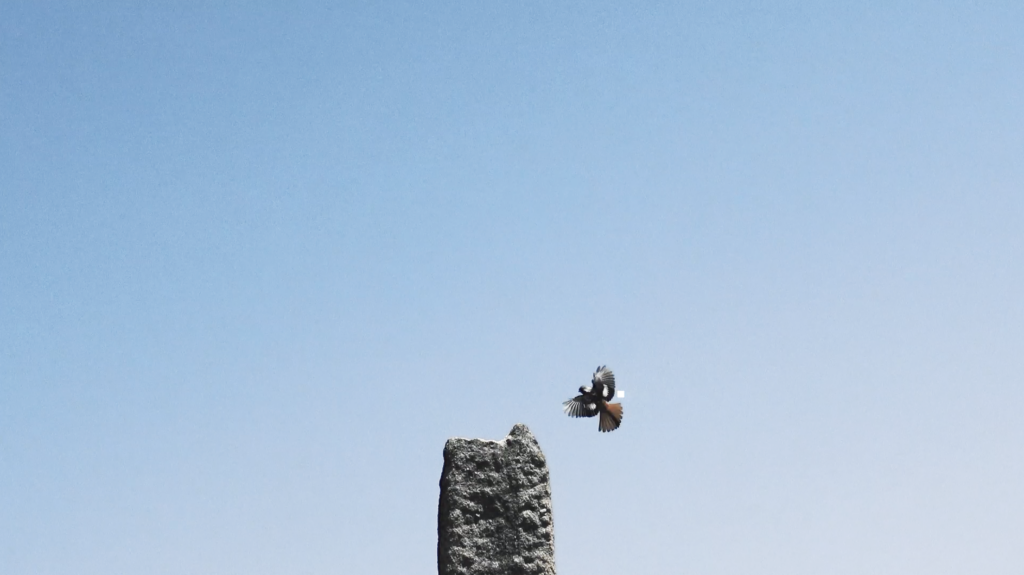
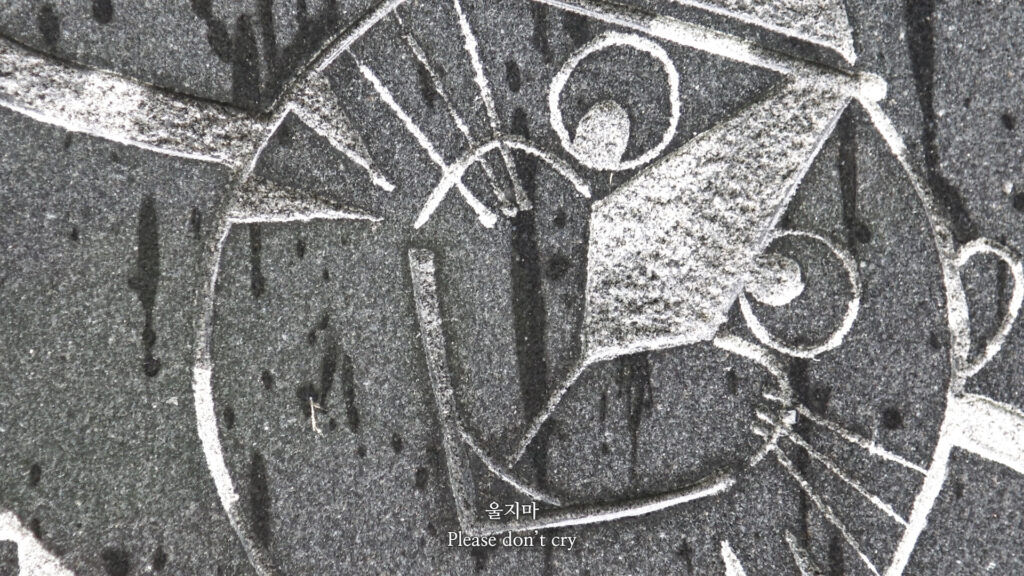
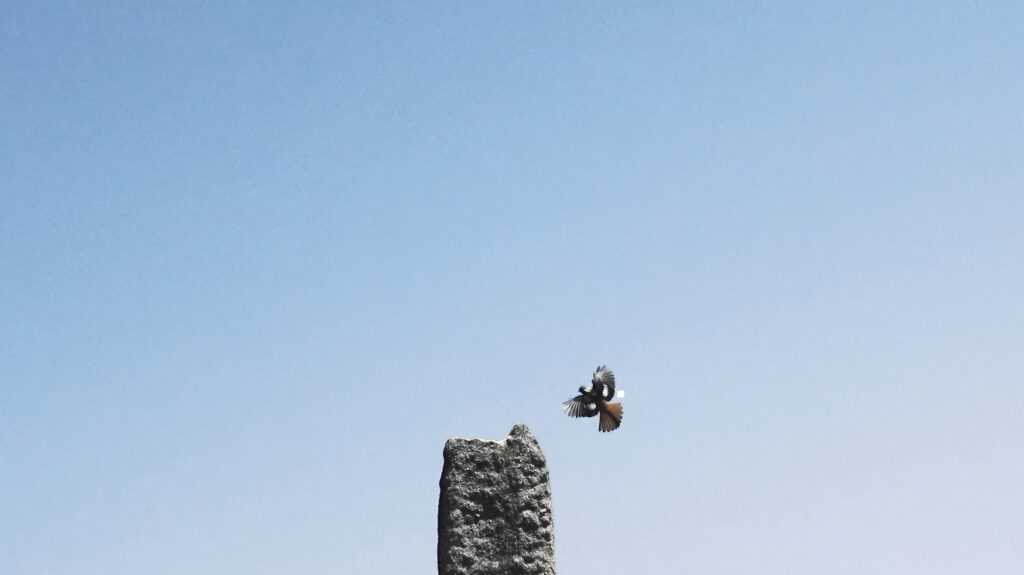
DORORI는 부안군 동중리 마을에서 2003년도에 사라진 ‘짐대하나씨(솟대 위의 새)’의 실종 사건과 그 후 18년간의 회귀 과정을 다룬다. 뉴스의 보도 내용, 기사에 달린 댓글, 마을 주민들의 증언, 이장님의 경험담, 문화재 애호가의 블로그 글, 박물관 학예사의 사견 사이에서 발견되는 앞뒤 맥락이 묘연한 진술들의 진실을 좇는다. 근거 없는 믿음과 부조리 안에서 찾게 되는 우연한 논리적 필연들은 또 다른 이야기 짓기의 가능성을 낳는다.
DORORI explores the disappearance of “Jimdae Hanassi” (the bird atop the sotdae) from Dongjung-ri village in Buan County in 2003, and the process of its cyclical return over the following 18 years. It follows the search for truth amid fragmented and ambiguous statements found in news reports, article comments, testimonies from villagers, the village head’s personal account, a cultural heritage enthusiast’s blog post, and the private opinions of a museum curator. Within the irrationality and baseless beliefs, the work uncovers accidental logical necessities—serendipitous connections that open up new possibilities for storytelling.

PREV
NEXT

밝은 방|The Bright Room|Mixed Media|Variable Dimensions|2016-2021

밝은 방
The Bright Room
Mixed Media|Variable Dimensions|2016-2021


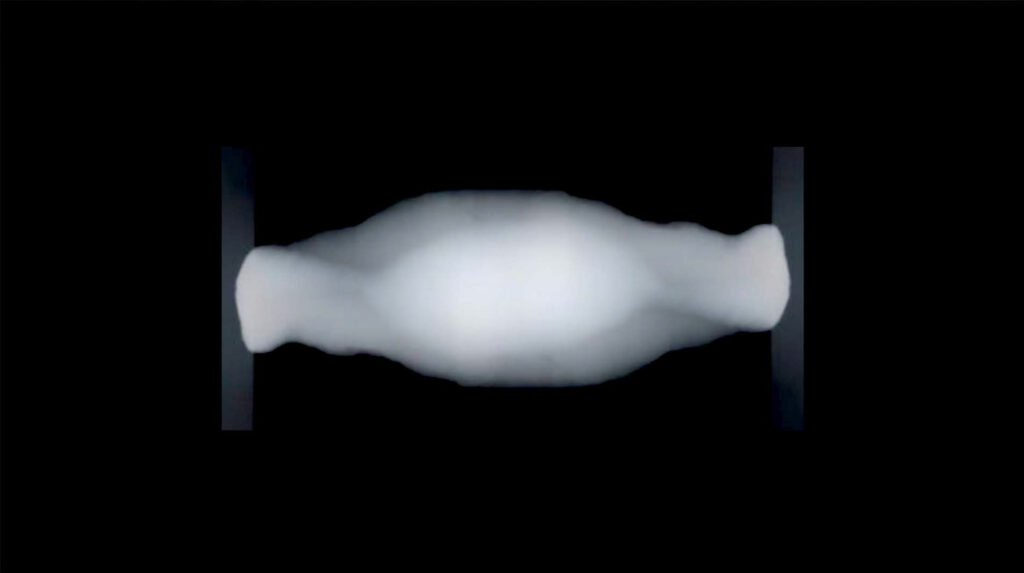
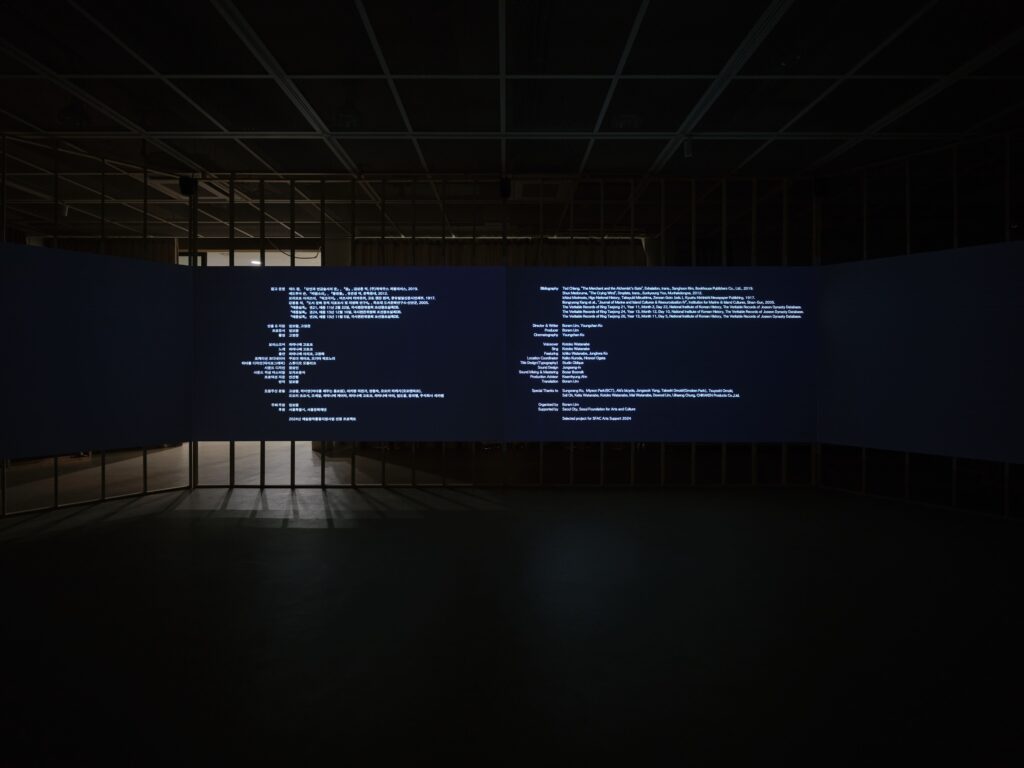
밝은 방은 롤랑 바르트가 쓴 저서 「밝은 방」으로부터 비롯되었다. 빛을 기록한 이미지, 즉 사진에 관한 본질적인 사유를 담은 책 전체가 작가에게는 푼크툼(punctum)을 촉발하는 하나의 이미지처럼 다가왔다. 그 이면에는 분명 암실이 아니라 밝은 방에서 피어오르는 상을 보았던 경험과 연결되어 있을 것이다. 이 작업에서 염전은 이미지를 창조하는 장이자, 물질을 생산하는 곳으로 기능한다. 느리고 수공적인 3D이미지 제작 과정을 염판위에서 소금꽃이 만들어내는 비정형 이미지와 대응시키며, 디지털 화면을 구성하는 기본 단위인 픽셀(pixel)과 소금(sel)의 관계를 탐구한다.
The Bright Room takes its name from Roland Barthes’ book Camera Lucida. For the artist, the entire book—filled with profound reflections on photographs as images that record light—appeared like a single image that triggers a punctum. Underlying this is likely the artist’s own experience of seeing an image emerge not in a darkroom, but in a bright one. In this work, the salt field functions both as a site of image creation and material production. The slow, handcrafted process of 3D image-making is juxtaposed with the amorphous images formed by blooming salt crystals on the salt pans, exploring the relationship between pixel—the basic unit of a digital screen—and sel (salt).

PREV
NEXT

태양 없이|Sim Solel|Single-channel Video|10′ 36″|2018

태양 없이
Sim Solel
Single-channel Video|10′ 36″|2018

with
Daniel Géri, Jean-Pierre Bonnafous, Jean Przybyla, Yvette Przybyla, Fabien Pachon, Jean-Pierre Guiraud, Jérôme Touchet, Constans Evelyne, Annie Cazabane, Laura Cazabane, Thierry Riva, Guillaume Lauze and 12 children from Villardonnel Primary School


태양 없이는 폐광 이후 여전히 광산마을을 터전 삼아 살아가는 사람들의 초상이다. 살시니유 금광산은 서유럽에서 가장 중요했던 그리고 프랑스에서 가장 마지막까지 남아있던 금광산이다. 2004년 수익성을 문제로 폐광되었고, 이는 지리적으로나 인구 통계상으로도 이 지역에 큰 구멍을 남겼다. 모든 갤러리의 입구는 콘크리트로 막혔고, 내부로의 진입이 금지되었다. 현재 광산 지면에는 태양열 발전판들이 들어서기 시작하면서 새로운 시대의 풍경이 만들어지고 있다.
이 작업은 서로 다른 두 세대(폐광 이전 광산을 경험한 세대와 폐광 이후 이 마을에서 태어나 자라고 있는 세대)의 병치와, 가상적인 상황설정(태양이 사라진 마을)을 통해 현재에서 청배한 과거를 이야기한다.

Sim Solel is a portrait of those who continue to make their lives in a former mining town, even after the closure of the gold mine that once defined it. The Salsigne Gold Mine, once the most important in Western Europe and the last remaining in France, was shut down in 2004 due to profitability issues. Its closure left a deep void—both geographically and demographically—in the region. All gallery entrances were sealed with concrete, and access to the mine’s interior was prohibited. Today, the landscape is beginning to change once again, as solar panels are installed across the former mining grounds, signaling the dawn of a new era.
This work juxtaposes two different generations—those who experienced the mine before its closure and those born and raised in the village after its decline. Through this generational contrast, and the fictional premise of a village where the sun has vanished, the work explores a past excavated from the present.

PREV
NEXT

살시니유|Salsigne|Edition|23.5×17.4 cm(87pages)|2017

살시니유
Salsigne
Edition|23.5×17.4cm(87pages)|2017

with

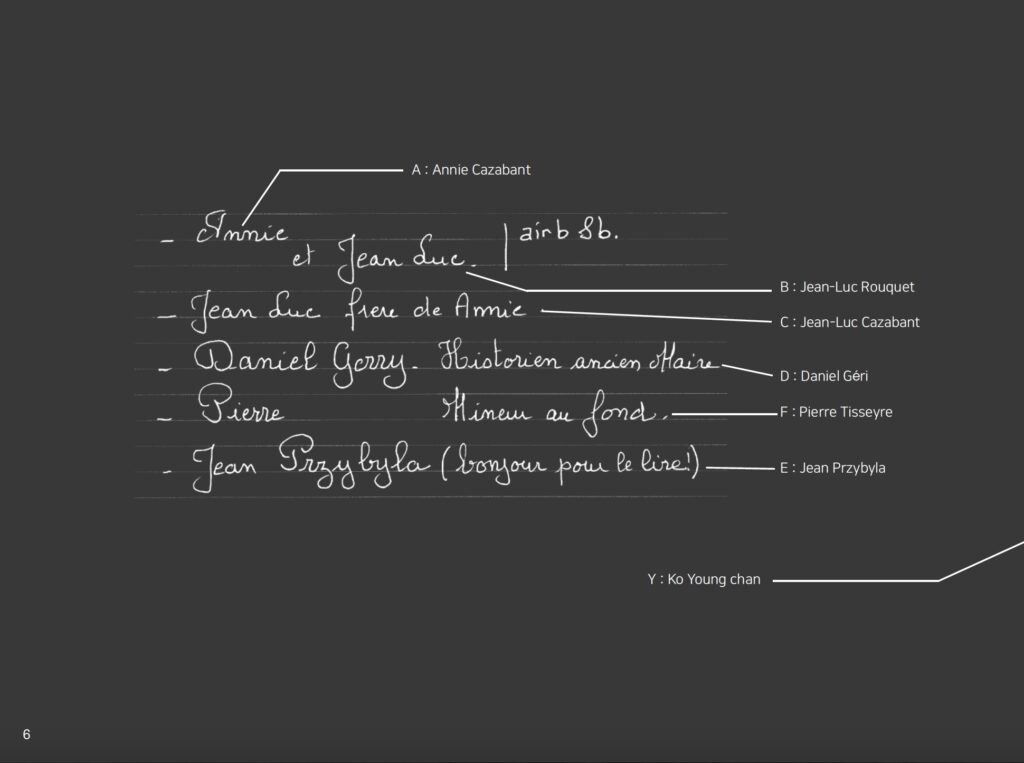
Annie Cazabant, Jean-Luc Rouquet, Jean-Luc Cazabant, Daniel Géri, Pierre Tisseyre, Jean Przybyla


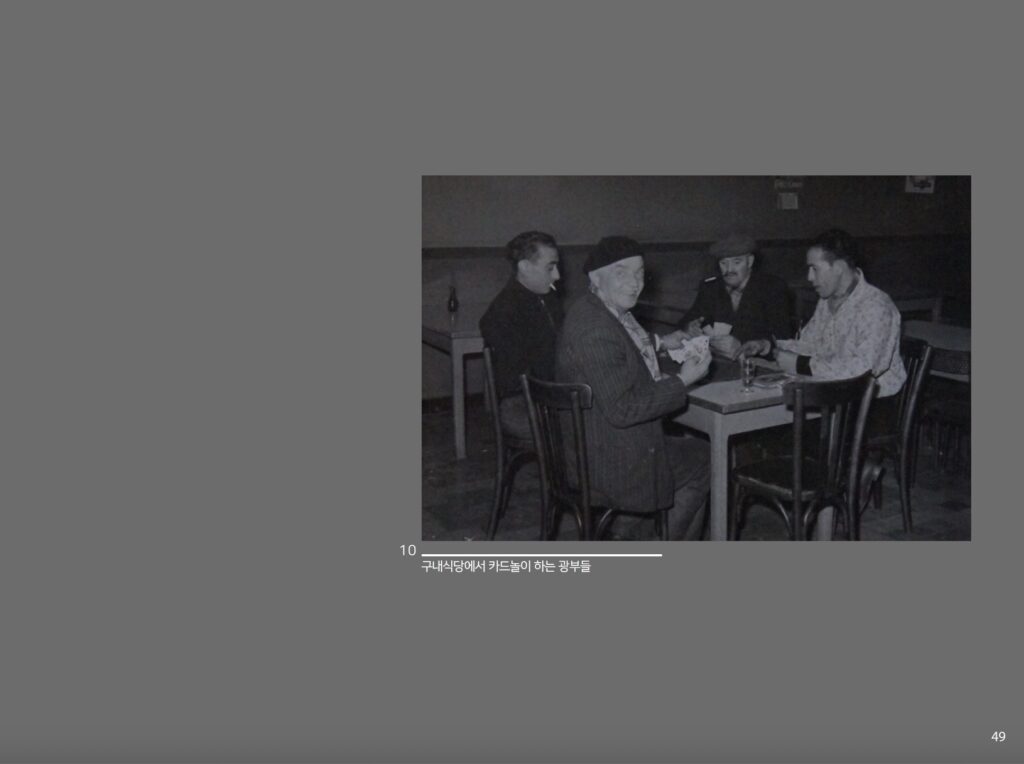
21세기 ‘제르미날(Germinal)’은 폐광으로 인해 비록 광산 내부에 진입해서 그 현장을 목도할 수 없게 되었지만, 아직은 그것을 증언해 줄 수 있는 사람들이 남아있었다. 살시니유는 전직 광부, 광산협회(Mine et Mémoire), 광산마을 주민들과의 대화를 기록한 광산에 대한 구술서이다. 이 책은 크게 5개의 챕터로 구성되어 있다. 각 챕터는 광산터 탐사, 광산의 역사와 이주 노동자, 폐광에 맞선 두 번의 사회운동을 다룬다. 이 조사는 작가와 마을 주민들 사이의 유대를 형성 하며 후속작 태양 없이로 이어지는 중요한 교두보가 되었다.
The 21st-century Germinal begins in a time when the mine has already been shut down—making it impossible to enter and witness the wealth that once lay underground—but some who can still testify to it remain. Salsigne is an oral history of the mine, compiled through conversations with former miners, the mining association(Mine et Mémoire), and residents of the mining village. The book is structured into five main chapters, each covering topics such as explorations of the former mining site, the history of the mine and migrant laborers, and two major social movements that rose up against its closure. This research formed a bond between the artist and the local community, becoming a critical stepping stone toward the follow-up work Sim Solel.

PREV
NEXT

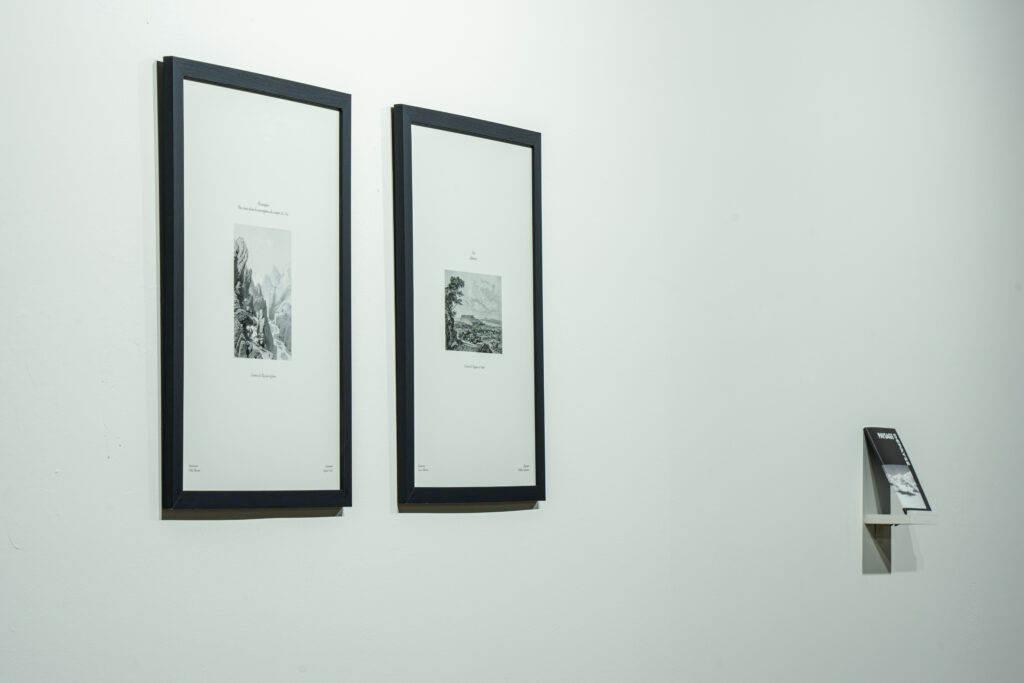
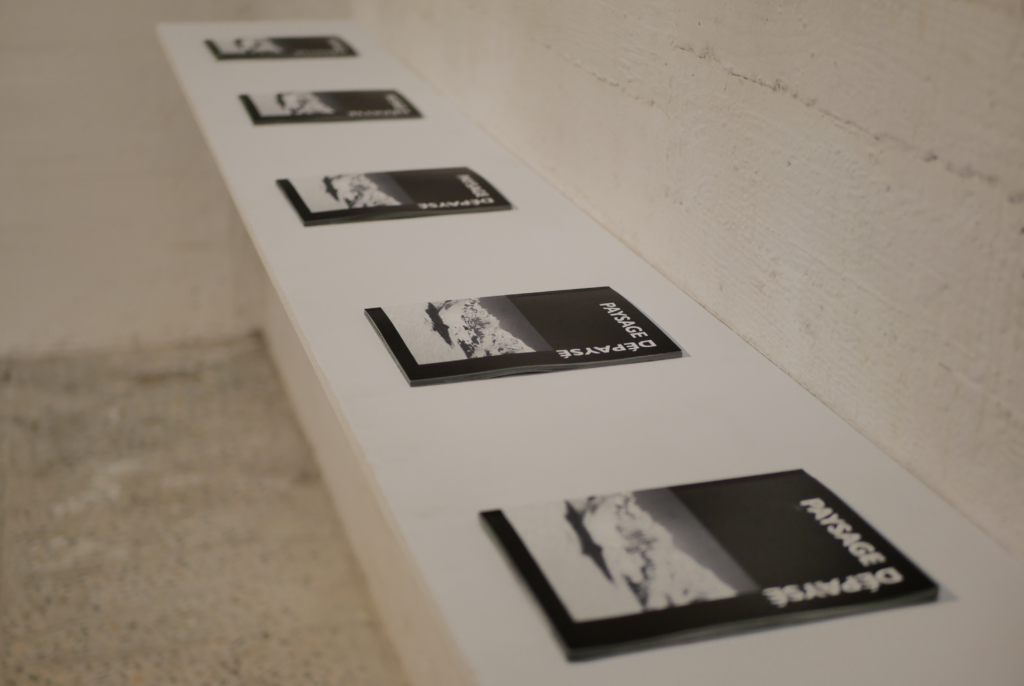
전치된 풍경|Paysage Dépaysé|Edition|15×19.6cm(54pages)|2017

전치된 풍경
Paysage Dépaysé
Edition|15×19.6cm (54pages)|2017


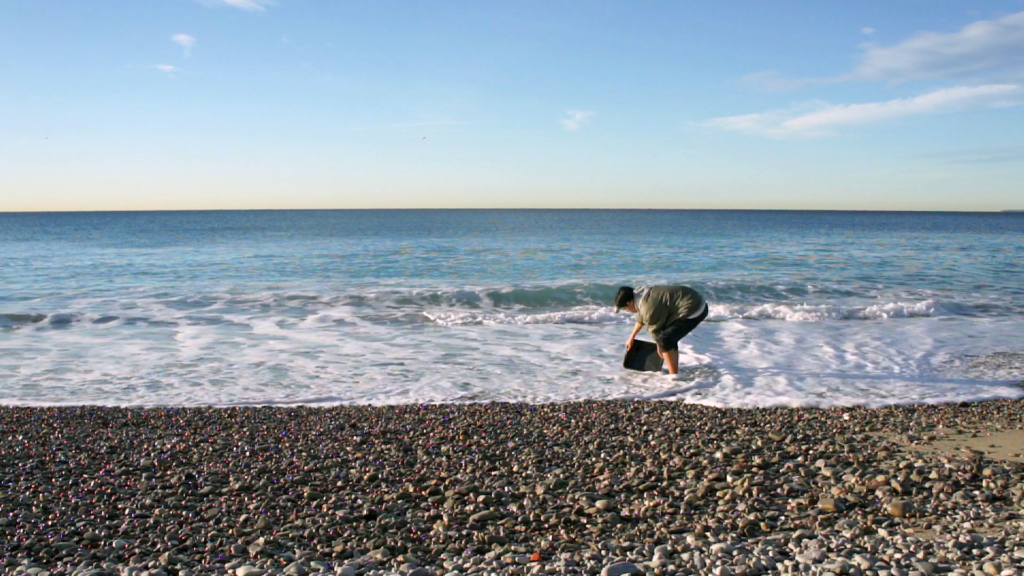
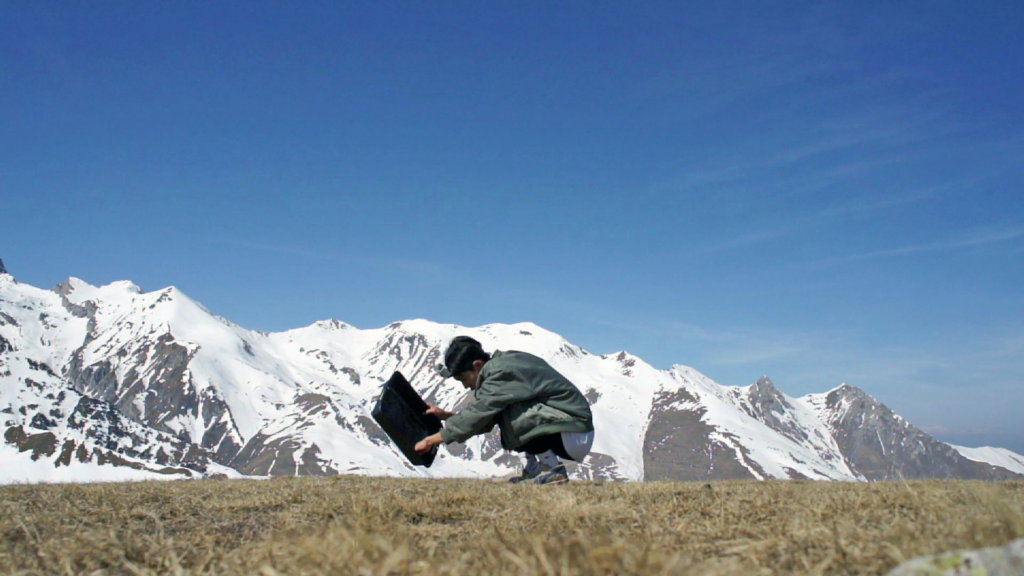
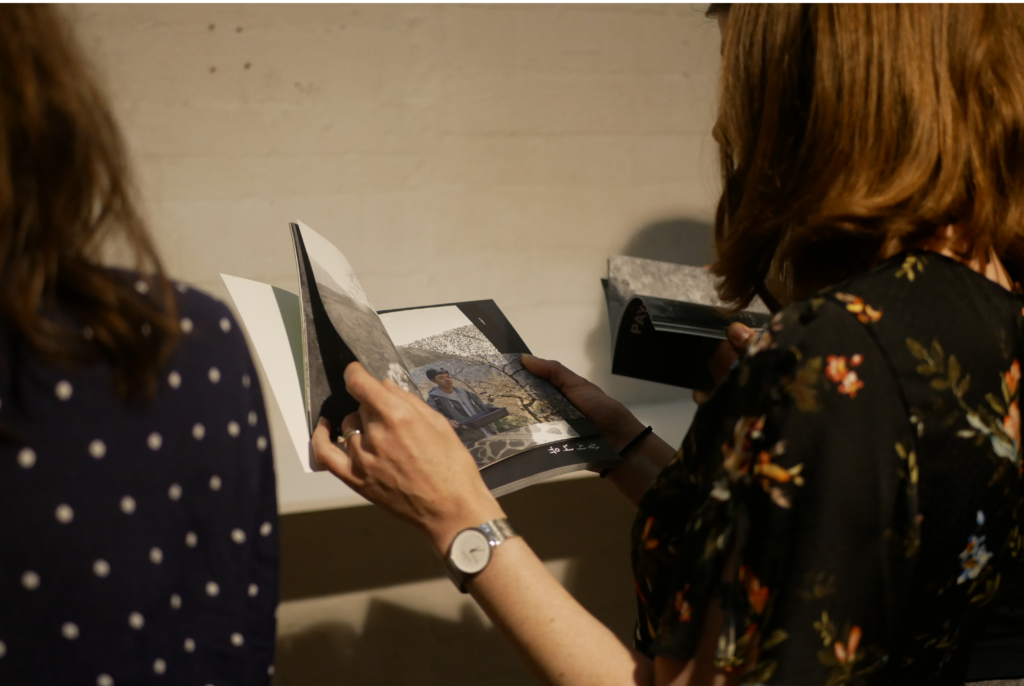
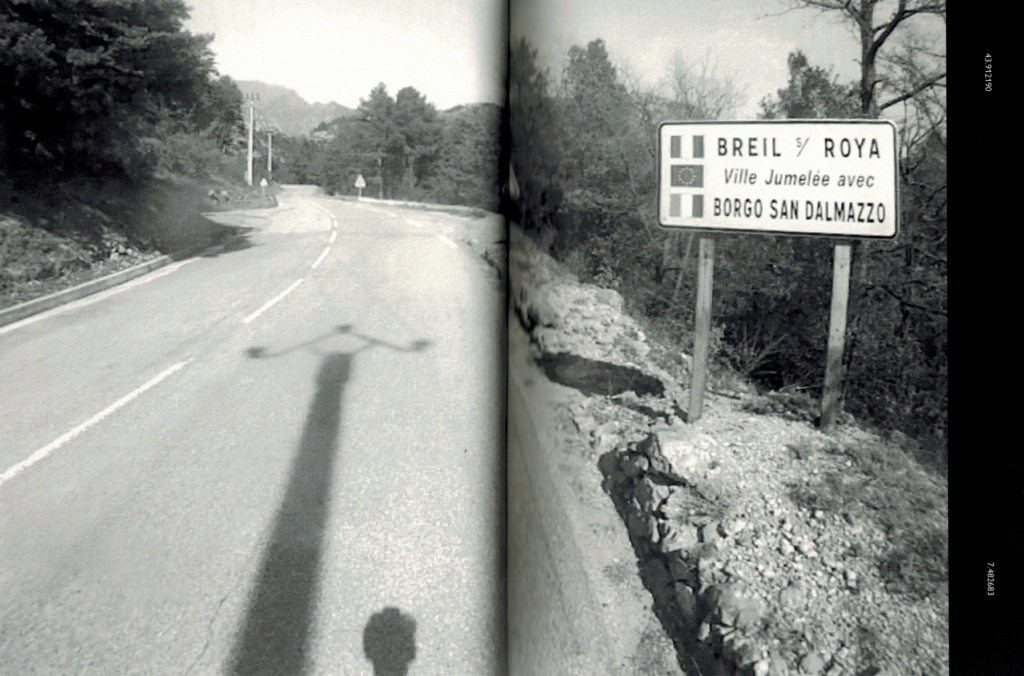
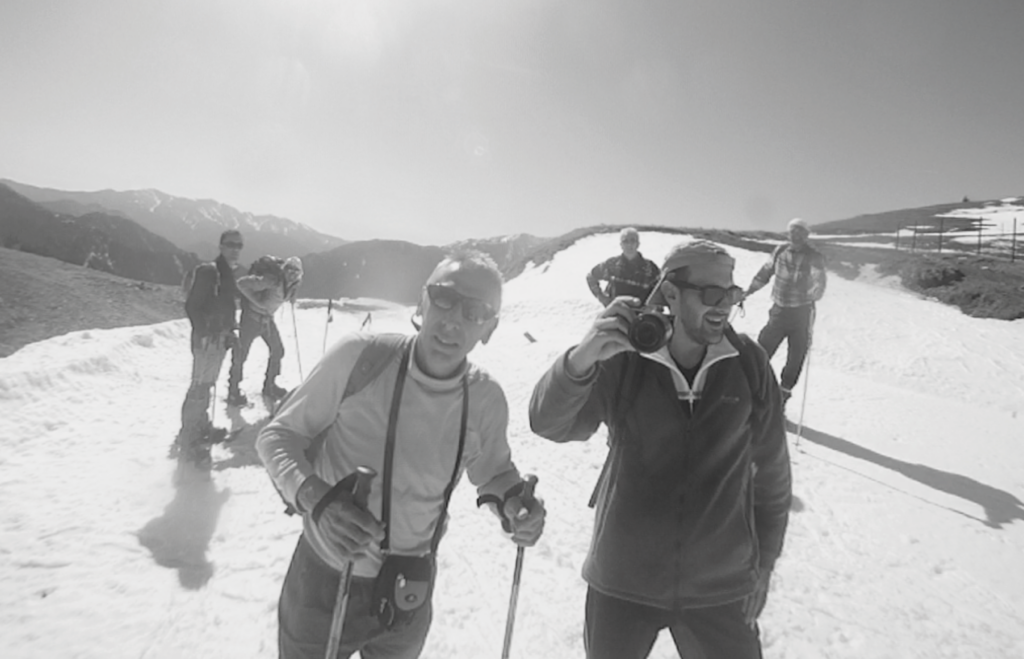
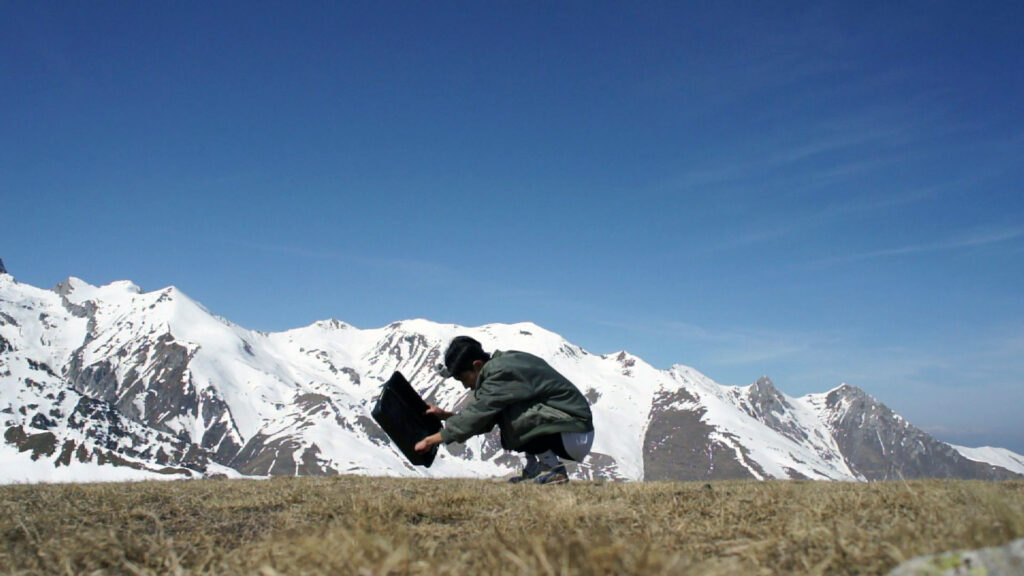
풍경을 옮기는 이 실험은 바닷물을 산 정상으로 옮기면서 증발로 남게되는 한 줌의 소금을 모아 작은 소금산 하나를 세워보자는 공상에서 시작되었다. 작가는 당시 그가 살고있던 프랑스 니스로부터 시작해 이탈리아 피에몽에 이르는 ‘소금길(route du sel)’을 발견한다. 중세시대에 건설된 이 상업 도로는 짐꾼과 당나귀의 노동을 통해 해안지역에서 산간지역까지 소금의 운반을 가능케 했다. 작가는 바다를 산으로 옮기기 위해 소금길의 일부를 따라 프랑스와 이탈리아의 국경인 Col de Tende까지 걷기로 한다. 3박 4일간의 여정을 기록한 책과 Academia Nissarda로부터 사용 승인을 받은 과거 소금길을 배경으로 제작된 동판화 이미지 두 점이 함께 놓인다.
This experiment in transposing landscapes began with a whimsical idea: to carry seawater to the top of a mountain and, through evaporation, gather a handful of salt—eventually forming a small salt mound. The artist, living in Nice, France at the time, discovered the historic Route du Sel (“Salt Road”) that stretches from Nice to Piémont, Italy. This medieval trade route once enabled the transport of salt from coastal areas to inland mountain regions, relying on the labor of porters and donkeys. To symbolically bring the sea to the mountains, the artist decided to walk a section of the Salt Road, from Nice to Col de Tende, a mountain pass on the French-Italian border. The journey, lasting four days and three nights, is documented in a book. Alongside the book, two copperplate prints—created using images of the historical Salt Road and officially approved for use by Academia Nissarda—are presented together as part of the work.

PREV
NEXT

천국의 스파이ㅣThe Spy from Heaven|Mixed Media|200x200x20cm, 05’13″|2017

천국의 스파이
The Spy from Heaven
Mixed Media | 200x200x20cm, 05’ 13″ | 2017

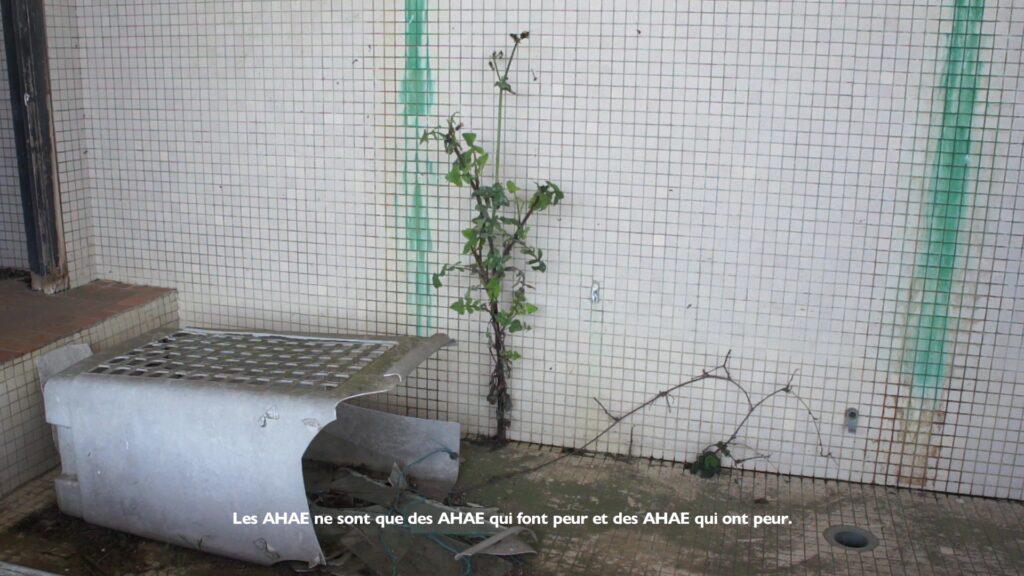
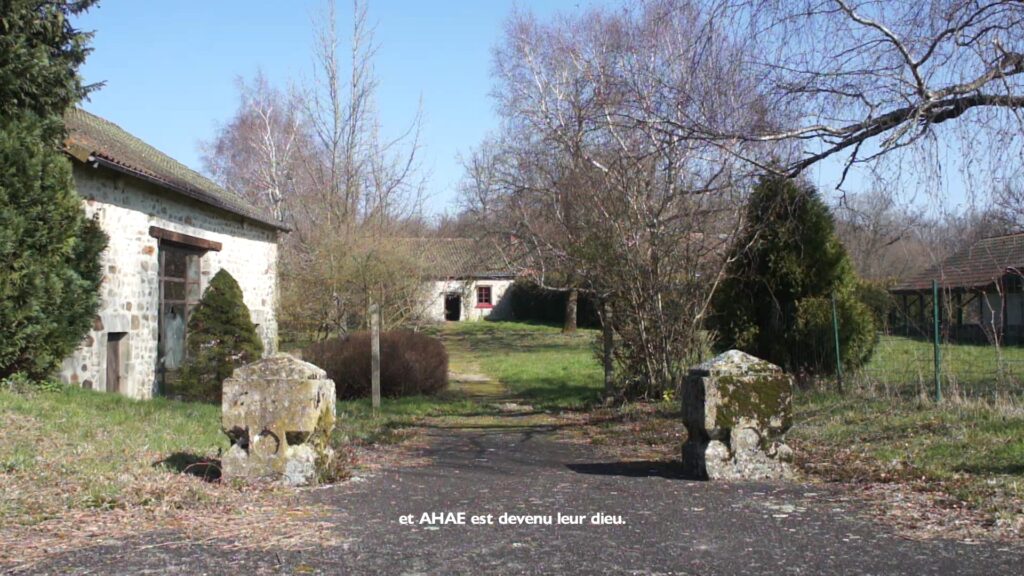
꾸흐붜피(Courbefy)는 프랑스 리모쥬 근처에 위치한 유령마을이다. 2012년 한 한국인은 이 곳을 예술가 마을로 만들겠다는 목적으로 구입한다. 그는 이미 한국에서 검은돈 세탁과 투옥생활, 사이비 종교 교주와 이 공동체의 폐쇄적인 마을 ‘금수원’에 연루된 논란이 많은 인물이었다. 허나 프랑스에서는 ‘아해’라는 사진가명으로 활동하며 루브르와 베르사유 같은 명성 있는 기관들에서 전시를 연다. 2014년 한국에서 그가 소유한 청운 회사에 소속된 ‘세월’이라는 배의 침몰 사고로 300명이 넘는 학생들이 무고한 목숨을 잃는다. 사고 후 그는 모든 조사와 책임을 회피하며 잠적한다.
천국의 스파이는 다양한 관점으로부터 살펴보는 인물 ‘아해’에 대한 추적이다. 특히 사업가로서 자연과 생명을 바라보는 태도와 예술가로서 그것이 불일치 하는 것을 폭로한다.
Courbefy is a ghost village located near Limoges, France. In 2012, a Korean man purchased the area with the stated intention of transforming it into an artists’ village. However, in Korea, he was already a highly controversial figure—implicated in money laundering, prison time, ties to a pseudo-religious cult, and involvement with a secretive commune known as Geumsuwon. In France, he reinvented himself under the artist name Ahae, exhibiting his photography at prestigious venues such as the Louvre and Versailles. But in 2014, tragedy struck when a ship named Sewol, owned by his company Cheonghaejin Marine, sank off the coast of Korea, resulting in the deaths of over 300 people, most of them students. Following the disaster, he evaded all investigations and disappeared from public view.
The Spy from Heaven is an investigative work that tracks Ahae from multiple perspectives, focusing particularly on the contradictions between his stance toward nature and life as a businessman, and the way he represents these themes in his work as an artist.

동굴 밖의 동굴|박상준|2025|(서울SF아카이브 대표, 동굴탐험가)

‘구프르 마르테르’.
중학생 때 읽었던 소설에 나오는 프랑스의 동굴. 수십 년이 지난 지금까지도 또렷하게 이름을 기억하고 있다. 그 이유는 어느 한 장면의 묘사가 남긴 강렬한 인상 때문이다.
주인공은 지하의 감옥에 갇혀있다가 감옥 밖 동굴로 탈출한다. 앞이 전혀 보이지 않는 칠흑 같은 어둠을 더듬고 상처입으며 계속 나아가지만 결국 탈진하여 드러눕고 만다. 그대로 포기하려는 즈음, 문득 등에 닿은 풀잎의 감촉과 뺨에 와닿는 바람을 느낀다. 그는 이미 동굴을 벗어나 지상에 나와 있었던 것이다. 그믐달이라서 앞이 전혀 보이지 않았을 뿐.이 소설은 앨프리드 베스터가 1956년에 발표한 <타이거! 타이거!>라는 작품이며 뒤마의 걸작 <몬테크리스토 백작>을 SF로 재해석한 피카레스크 모험담으로서 SF문학사에서는 걸작 중 하나로 손꼽힌다. 위에서 언급한 곳은 프랑스 남부, 스페인과의 접경지역에 실존하는 ‘Gouffre Martel’ 동굴이다. 발음을 우리말로 쓰면 ‘구프르 마르텔’이 맞겠지만 중학생 때 읽은 판본은 일본어 중역판이었는지 ‘마르테르’라고 표기했었다.

성인이 되어 동굴 탐사를 다니게 되었지만 사실 구프르 마르테르를 읽은 기억과는 별 상관이 없다. 역시 중학생 때 읽은 칼 세이건의 <코스모스>에서 본 외계 얼음동굴 상상화가 더 직접적인 동인에 가까울 것이다. 하지만 지금 와서 돌이켜보니 둘 다 중학생 때 처음 접한 것이다. 아마도 앞서거니 뒤서거니 읽었던 두 책에서 동굴의 심상이 중첩되어 무의식적으로 각인된 것인지도 모르겠다. 어쨌거나 나는 동굴 탐사를 왜 하냐는 질문을 받으면 ‘우주탐사를 하고 싶지만 현실적으로 불가능해서 그 대안으로’라고 답을 하곤 한다. 동굴 깊숙이 들어가 앉아서 가만히 있으면 이곳이 지구라는 것을 알 수 있게 해주는 것은 단지 익숙한 중력밖에 없다. 나머지 차이들은 우주복으로 다 가려질 것이다.

기실 우주야말로 하나의 거대한 동굴이다. 우주는 어둡다. 헤아릴 수 없이 많은 별들이 반짝이긴 하지만 기본적으로 우주는 암흑의 공간이다. 나는 그 어둠이 두렵기보다는 어쩐지 안온하게 다가온다. 어둠은 흔히 불안과 공포의 대상이고 대개는 ‘어둠의 세력’ 같은 식으로 부정적인 느낌의 표현과 붙는다. 보이지 않기에 불안할 것이다. 뭐가 있는지 알 수 없기에 두려울 것이다. 하지만 나는 우주의 어둠은 원초적인 가능성의 총집합이라고 생각한다. 무엇이든지 나올 수 있는 거대한 자궁이다. 인간이 막막한 암흑 속 우주에서 한 줌도 안되는 태양의 빛에만 모든 것을 의탁할 수밖에 없는 사정은 물론 이해하지만 그걸 맹목적인 신앙으로 받아들이고 싶지는 않다. 어둠과 친해지고 어둠 속에서 평안과 지혜를 구하는 것이 더 본질적이고 근원적일 수 있다.

<타이거! 타이거!>에는 흥미로운 설정이 하나 나온다. 어느 순간 인간의 감각이 뒤죽박죽이 되어 외부 자극과 뇌의 해석이 일치하지 않는다. 소리는 빛으로 보이고 빛은 맛으로 느껴지는 식이다. 인간은 외부 환경을 인식할 때 90%는 시각 정보에 의존한다고 하는데, 동굴 안에 들어가면 시각적 자극이 완전히 사라지기 때문에 자연스럽게 소리에 민감해지게 된다. 그러다가 어디선가 물방울 떨어지는 소리가 들리면, 나는 그 소리가 마치 눈에 보이는 듯한 기분이 든다. 만약에 동굴에서 아주 오래 머문다면 나에게도 감각 혼란이 일어날까? 적응 기간을 거치면 세상과 우주를 인식하는 새로운 감각의 지평이 열릴지도 모르겠다.

<타이거! 타이거!>의 주인공은 동굴 밖으로 나왔으면서도 시각 자극이 전무한 탓에 여전히 동굴 안에 있다고 믿었다. 그를 깨운 것은 시각이 아닌 촉각이었다. ‘눈에 보이는 것이 다가 아니다’라는 말은 진부하지만 너무나 명징한 진리이다. 외부 세계의 90%는 눈으로 알 수 있지만 그것으로 퍼즐이 완벽히 맞춰지는 것은 아니다. 나머지 부분을 차지하는 감각들, 그게 뒷받침되어야만 비로소 주관적 인지가 완성된다. 물론 해석은 또 다른의 차원의 얘기지만.

이 모든 레토릭들을 접어두고, 나는 그저 이 말을 남기고 싶다. 동굴 깊숙이 자꾸자꾸 계속 들어가서 조그만 구멍 하나를 빠져나가면(여기까지는 실제로 동굴 탐사하면서 이따금 경험하는 일이다) 어느 순간 막막하게 펼쳐진 암흑이 온화하게 맞아주는, 그런 거대한 우주와 마주하는 꿈을 꾸고 싶다. 등에 닿은 대지를 의식하면서 동시에 우주의 바람을 느끼고 싶다.

※본 에세이는 한국문화예술위원회 지역예술도약지원사업을 통해 작성되었습니다.

「The Cave Beyond the Cave」

Park Sang Joon(Representative, Seoul Science Fiction Archive, Caver)

‘Gouffre Martel’.
A French cave featured in a novel I read in middle school. Even decades later, I still remember its name clearly. The reason is the powerful impression left by the description of one particular scene.
The protagonist, imprisoned in an underground dungeon, escapes into the cave beyond the prison. Groping through pitch-black darkness where he could see nothing, he continues forward, wounded, but eventually collapses from exhaustion. Just as he is about to give up, he suddenly feels the touch of grass blades on his back and the wind on his cheek. He had already escaped the cave and emerged onto the surface. It was just that the new moon meant he couldn’t see a thing.

This novel is Alfred Bester’s 1956 work <Tiger! Tiger!>, a picaresque adventure story that reimagines Dumas’ masterpiece as science fiction. It is considered one of the masterpieces in the history of science fiction literature. The location mentioned above is the real-life Gouffre Martel cave in southern France, near the border with Spain.

As an adult, I began exploring caves, though this has little to do with my memory of reading ‘Gouffre Martel’. The illustration of an extraterrestrial ice cave I saw in Carl Sagan’s , which I read in middle school, is probably a more direct influence. But looking back now, I first encountered both books in middle school days. Perhaps the imagery of caves from these two books, read one after the other, overlapped and became unconsciously imprinted. Anyway, when asked why I explore caves, I often answer, ‘Because I want to explore space, but since that’s realistically impossible, this is my alternative.’ When you sit deep inside a cave and remain still, the only thing that tells you this is Earth is the familiar gravity. All other differences would be masked by a spacesuit.

In truth, the universe is one vast cavern. The universe is dark. Though countless stars twinkle, fundamentally the universe is a space of darkness. Somehow, that darkness feels comforting to me rather than frightening. Darkness is often associated with anxiety and fear, usually linked to negative expressions like ‘dark forces’. It must be unsettling because we cannot see. It must be frightening because we cannot know what lies within. But I believe the darkness of the universe is the primordial sum of all possibilities. It is a vast womb where anything could emerge. I certainly understand humanity’s predicament, relying entirely on the meager light of the sun in the vast, impenetrable darkness of space. Yet I refuse to accept this as blind faith. Becoming familiar with the darkness, seeking peace and wisdom within it, may be more essential and fundamental.

<Tiger! Tiger!> presents an intriguing setting. At some point, human senses become jumbled, causing external stimuli and the brain’s interpretation to misalign. Sounds appear as light, and light is perceived as taste. Humans rely on visual information for 90% of their environmental awareness, but entering a cave eliminates all visual stimuli, naturally heightening sensitivity to sound. Then, when I hear the sound of water droplets falling somewhere, I feel as if I can actually see that sound. If I were to stay in a cave for a very long time, would I also experience sensory confusion? After a period of adaptation, perhaps a new sensory horizon for perceiving the world and the universe would open up for me.

The protagonist of <Tiger! Tiger!> had emerged from the cave, yet due to the complete absence of visual stimuli, he still believed he was inside. It was not sight but touch that awakened him. The saying ‘seeing isn’t everything’ may be trite, but it’s an undeniably clear truth. While 90% of the external world can be perceived by sight, that alone doesn’t complete the puzzle. The remaining pieces are filled by the other senses; only when they are supported does subjective cognition become whole. Of course, interpretation is another matter entirely.

Setting aside all this rhetoric, I simply want to leave these words behind. I dream of venturing deeper and deeper into the cave, squeezing through a tiny hole (something I’ve actually experienced occasionally during cave exploration), and then suddenly facing a vast universe—a vast universe where the overwhelming darkness gently welcomes you. I want to feel the earth beneath my back while simultaneously sensing the wind of the cosmos.

⟪탈주⟫: 모호성으로 번지는 침투|정수진|2024

동굴에 사는 생물들은 대개 눈이 퇴화해 사라진다.

1)

완전한 어둠 속에서 시각 대신 다른 감각을 곤두세우며, 시간의 흐름조차 다르게 받아들인다. 그런데 동굴 속 외눈박이 괴물은 특이하게도 ‘눈’을 가지고 있다. 아니, 어쩌면 가져야만 했을지도 모른다. 작가는 이 괴물에게 잃어버렸거나 닫혀 있던 ‘눈’을 되찾아주었고, 그 눈은 이제 단순한 어둠이 아닌, 살아 움직이는 상(像)—눈으로 보거나 마음에 그려지는 사물의 형체—을 포착한다.

2)

고영찬의 개인전 ⟪탈주⟫는 전작인 아카이브 설치 작업 <언홈리 아일랜드 주토피아> (2023)에서 직조한 여러 구멍들 속으로 더 깊숙히 침투한다. ‘굴다방’의 내부로, ‘이름없는 뼈’ 속으로, 그리고 ‘신자연인’의 몸 안으로. 이처럼 여러 ‘구멍-동굴’로 스며들며 마주하는 것은 바로 외눈박이 괴물의 ‘눈’이다. 폴리페무스(Polyphemus)의 눈은 몽상인지, 공상인지, 혹은 예견인지 알 수 없는 상상의 공간으로 우리를 이끈다. 그곳에서 들려오는 ‘우글거리는’ 이야기들은 단일한 결론을 거부한다.

3)

대신 어둠과 형상, 그리고 그 경계의 모호함 속에서 끊임없이 새로운 구멍-통로를 만들어내며 탈주의 움직임을 지속한다.


*
외눈박이 괴물의 ‘눈’ 외에 그의 다른 몸은 결코 만날 수 없는 걸까? 굴다방—혹은 전시의 첫 동굴-구멍—에서 처음 마주하는 것은 <외눈박이 괴물의 털> (2024)이다. 시간의 흔적처럼 가늘고 긴, 한 올의 ‘흰’ 털이 놓여 있다.
완전히 늙어서… 한 올도 남김없이 머리털이 하얗게 세었을 때, 그때 꼭 한번 만나보고 싶은데 … 젊음도 육체도 없이. / 열망할 시간이 더 남지 않았을 때. / 만남 다음으로는 단 하나, 몸을 잃음으로써 완전해질 결별만 남아 있을 때.

4)

괴물의 온전한 모습은 끝내 보이지 않는다. 단지 이 백발 한 올만이 남겨져 있다.
전시장 깊숙히 들어서면 검푸른 물감이 흩뿌려진 산들 사이로, 검은 언덕으로 향하는 “축 늘어진 코와 팔랑대는 귀를 가진” 어느 짐승의 애달픈 이야기가 낮게 울린다. (<검은 언덕>, 2024) 동굴에서는 시각이 아닌 다른 감각으로만 그의 몸을 느껴야 할지도 모른다.
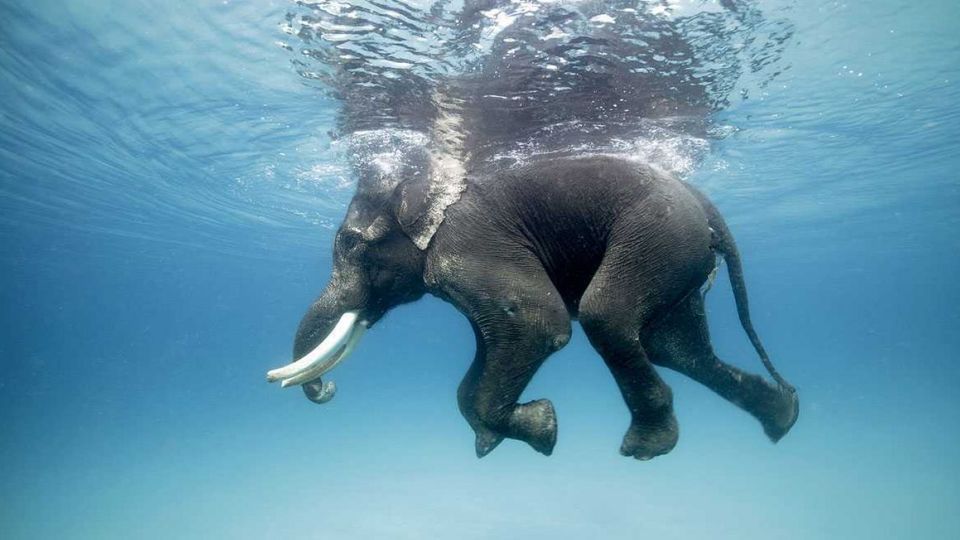
“길들인 코끼리를 순천부(順天府) 장도(獐島)에 방목(放牧)하는데, 수초(水草)를 먹지 않아 날로 수척(瘦瘠)하여지고,사람을 보면 눈물을 흘립니다.”

5)

외눈박이 괴물은 이 검은 언덕, 섬인지 동굴인지 알 수 없는 그곳에 유배된 코끼리의 환영일까? 목소리의 결마다 외눈박이 괴물의 형상이 희미하게 그려진다.

<바다위의 에덴> (2024) 에서는 외눈박이 괴물의 몸이 ‘이름 없는 뼈’로 투영된다. 이로써, ‘견골상상(見骨想象)’의 미로가 펼쳐진다. 한편, 흰 것과 검은 것 사이, 확신과 의심 사이의 틈새에서 유영하는 회색 덩어리들이 꿈틀거린다. 미래에서 현재로 닿지 못한 채 과거로 흘러간 “아일랜드 주토피아(Island Zootopia)”는 바로 이 아스라한 ‘회색지대’다.
어린 날, 싱그러운 팔에 참을 인(忍)자를 문신으로 새겼던 한 남성의 몸 안으로 침투하면, 신안군의 한 섬에 조성될 계획되었으나 실현되지 못한 사파리 사업—‘아일랜드 주토피아’가 드러난다. 뿌리를 내리지 못한 섬은 작가의 ‘상상’ 속에서 계속 확장되는 흐릿한 시공간이다. 바다 위에 둥둥 떠있는 이 섬에는 ‘신자연인’이 살고 있다.
3D 모델링된 회색 덩어리들은 불연속적으로 깨지고 흩어지며 그 존재를 드러낸다. 이는 몽상인지, 공상인지, 혹은 미래의 한 단면인지 알 수 없다. 신자연인은 자연으로 돌아가 기체조를 하고 돌로 짱돌찌개를 끓이며, 백발이 되기 전 가졌던 ‘열망할 시간’을 되찾으려는 염원을 품고 있다.

6)

그러나 그의 미래 역시 ‘아일랜드 주토피아’와 같은 운명인 것일까?
이 회색 덩어리가 단순히 상상의 파편만은 아님을 보여주는 단서는 <신자연인> (2024)의 사진에서 찾을 수 있다. 쑥이 비염을 낫게 한다는 근거 없는 믿음으로 코를 막고 있는 ‘신자연인’의 모습은 현실과 상상의 경계를 흐린다. 그는 미래를 꿈꾸면서도 과거를 상기시키는 위치에 남아 있다. 작가는 묻는다. “나이가 들수록 스스로의 신체에서 온전함을 느끼지 못할 때, 우리는 그것을 주변으로 채우려는 것이 아닐까?”

7)

확신과 의심 사이에서 답을 내리지 않은 채, 신자연인은 여전히 회색지대를 유영한다.
외눈박이 괴물과 신자연인의 경계는 더욱 모호해진다. 흰 털로 돌아가 보자. 머리카락이 보이지 않는 신자연인의 백발일까? 아니면 괴물의 자취일까? 외눈박이 괴물은 곧 어느 짐승이며, 또 신자연인이기도 한 것일까? 파고들수록, 혹은 침투할수록, 오히려 모호함은 더 짙어진다. 구멍-동굴은 또 다른 탈주의 통로를 열어놓는다. 이야기는 계속 늘어나고, 다시 그 구멍을 엮어낸다.

*
영혼을 놀라게 하고 공포를 불러일으키는 모든 것은 숭고함으로 이어진다. 광활한 평야는 바다처럼 놀랍지 않으며, 고요한 바다는 거친 바다만큼 놀랍지 않다. 모호함은 공포를 증폭시킨다. … 명료함은 설득이 필요할 때는 유용하지만, 감동을 원할 때는 쓸모가 없다. 어떤 형태의 명료함도 열정을 약화시킨다. 시인은 영원, 무한, 광대함, 시간, 공간, 신성, 무덤, 갈기, 지옥, 모호한 천국, 깊은 바다, 모호한 숲, 천둥, 구름을 찢는 번개에 대해 끊임없이 이야기한다. 어두워져라… 이 모든 것에는 설명할 수 없는 공포와 웅장함, 그리고 모호함이 깃들어 있다.

8)

<바다 위의 에덴>에는 사실 회색빛만 가득한 것이 아니다. 두 채널 모두 회색 톤의 덩어리를 붉은 빛이 감싸고 있다. 작가는 붉은 빛에 관해 꺄따필의 환대의 색으로 설명한다.

9)

어둡고 모호해 두려운 구멍-동굴 속으로 나아갈 수 있는 힘은 바로 이 붉은 빛에 있다. 붉은 빛과 함께, 시인으로서 고영찬의 이야기는 계속 이어질 것이다.

  1. 참조, 조홍섭, “캄캄한 동굴 속 눈 잃은 물고기의 하루는 47시간,” 2011년 9월 15일, www.hani.co.kr/arti/m_special/m_hanispecial/496234.html.
  2. “상(像),” 네이버 국어사전.
  3. 폴리페무스는 호메로스(Homer)의 오디세이(The Odyssey)에 등장하는 포세이돈의 아들이자 사이클롭스(Cyclopes)—눈이 하나 달린 거인—중 하나이다.
    그의 이름은 “많은”을 뜻하는 “폴리(poly)”와 “목소리” 또는 “소문”을 뜻하는 “페무스(phemus)”에서 유래했다. 따라서 폴리페무스라는 이름은 “목소리가 많은” 또는 “말이 많은”이라는 뜻으로 해석할 수 있다. 또, 고영찬의 작업과 연계해 흥미로운 점은 폴리페무스가 자연과 조화롭게 살아가는 섬의 거주자로 묘사된다는 점이다. 참조, Rhianna Padman, “Polyphemus: Who Was the Cyclops That Was Tricked by Odysseus?,” The Collector, uploaded Dec 29, 2023, https://www.thecollector.com/polyphemus-cyclops-odyssseus/, 또한, 헤겔에 대한 이해가 있는 독자를 위해 덧붙이자면, 여기서 ‘우글거리는’이라는 표현은 작가가 서문에서 인용한 가스통 바슐라르(Gaston Bachelard)의 개념에서 비롯되었다. 바슐라르의 ‘우글거리는 이미지(swarming image)’는 끊임없이 증식하고 변화하며, 다수에서 하나로 귀결되는 헤겔의 변증법적 체계에 반대하는 개념으로 해석될 수 있다. 참조, Gaston Bachelard, Earth and Reveries of Will: An Essay On the Imagination of Matter (Dallas: Dallas Institute of Humanities and Culture, 2002), 48-49.
  4. 한강, 『흰』, 문학동네, 2018, 91.
  5. 참조, <언홈리 아일랜드 주토피아>, 2023.
  6. 참조, <언홈리 아일랜드 주토피아>, 2023.
  7. 참조, <언홈리 아일랜드 주토피아>, 2023.
  8. Murray Krieger, Ekphrasis: the illusion of the natural sign (Baltimore: Johns Hopkins University Press, 1992), 101-102.
  9. 참조, 전시서문.

※본 원고는 전라남도문화재단 청년예술가지원사업을 통해 작성되었습니다.
구멍 잣기|정수진|2023

실제로 경험하지 않은 것을 머릿속에서 그려보는 ‘상상’(想像)이라는 말의 어원은 견골상상(見骨想象), 즉 “코끼리를 보기 힘들게 되자 죽은 코끼리의 뼈를 구해, 그림을 그려 산 모습을 떠올려 보곤 했다”는 데서 유래했다.

1)

고영찬의 연구에도 코끼리의 뼈가 나오는데, 이를 통해 작가가 그리는 것은 무엇일까?
작가의 연구에 등장하는 코끼리의 뼈 중 하나는 아프리카 코끼리 골격 3D모델링 이미지로 미케 로스(Mieke Roth)라는 사람이 스미소니언 재단(Smithonian Institution) 웹사이트에서 다운로드 받은 매머드 골격에서 유추하여 제작한 결과물이다.

2)

멸종한 동물의 골격을 디지털로 변종 시킨 이 3D 코끼리뼈는 시간과 장소에서 완전히 분리됐고 (혹은 애초에 속해있는 시간과 장소가 없고), 내용이 계속 업데이트될 수 있으며(다시 말해 수정 및 보완이 가능하며), (동물학자인 경우를 제외하고) 언뜻 보아서는 얼마나 정확한지 가늠하기가 어렵다. 그리고 이 기이한 이미지는 여러 시공간에 걸쳐 계속 떠돌아다녀야만했던 혹은 장차 그러한 일을 겪게 될 운명에 처한 코끼리, 팽나무, 수국 등과 함께 또 다른 기이한 시공간을 만들어나간다. 바로 전라남도 신안군 도초도에 조성될 예정이지만 여전히 뿌리는 내리지 못한, 그럼에도 작가에 의해 계속 그 시공간이 업데이트되는 중인 ‘제멋대로인’ 장소⎯‘아일랜드 주토피아(Island Zootopia)’다.

3)

고영찬은 그동안 작업을 통해 ‘제멋대로인 장소(unruly place)’

4)

에 대해 다뤄왔다. 다시 말해, 민속문화재 ‘짐대하나씨’가 사라졌다가 회귀한 동중리 마을이나 프랑스 남부의 폐광된 광산마을 등 지도에서 읽을 수 없고 (작가의 표현을 빌리자면 제멋대로인) “우리가 살고 있는 세상에 대해 재고해보게 만드는 아주 특별한 장소”들을 보여줬다.

5)

그러나 그의 작업에서 정말 ‘제멋대로인’ 부분은 바로 그러한 장소를 작가가 ‘상상’해나가는 방식이다.

다시 ‘아일랜드 주토피아’로 돌아가보자. 고영찬의 아카이브 설치 작업 <언홈리 아일랜드 주토피아> (2023)는 지자체에서 신안군의 한 섬에 사파리를 만들겠다는 계획에 머물고 있는 사업 ‘아일랜드 주토피아’에 대해 ‘상상’한다. 작가는 땅에 발 딛지는 못한 채 둥둥 떠 있기만 한 이 사업과 관련하여, 역사적 기록부터 신문기사, 지역 민속 신화와 토속 민요, 태몽에 대한 주민 인터뷰, 그리고 영화 속 장면 등 인터넷을 떠돌아다니는 이미지들과 직접 찍은 사진 등을 통해 그에 대한 구멍을 직조해나간다. 예를 들어, 태종실록에 기록된 유배된 코끼리는 배 위에서 물건처럼 옮겨지는 코끼리를 담은 흑백 사진으로, 이는 다시 영화 라이언킹에 나오는 코끼리 무덤으로 이어지며 인간에 의해 끊임없이 옮겨진 코끼리들에 관해 말하고, 이는 곧 사파리 사업으로 인해 옮겨질 코끼리와 공명한다. 이렇게 작가는 뼈와 뼈 사이에 살을 붙여나가는 것이 아니라, 구멍을 조립한다. 하나의 이야기는 구멍을 통해 다른 이야기로 계속 빠져나가고 흘러나간다. 이러한 구멍은 “직조된 것과 그려진 것, 실재와 연출의 혼합”이 이뤄지는 곳이자, 이야기가 증식되는 통로이다.

6)

이렇게 여러 층위로 증식되어 나가는 이야기는 “현실 속에서 픽션의 생산뿐만 아니라, 픽션을 통한 현실의 생산” 또한 보여준다.

7)

계속 계획에만 머물러있는 사파리 사업으로 인해 땅을 잃은 주민들의 이야기는 발매리에서 발견한 물뱀의 생생한 시체 사진으로, 이는 다시 주민 누군가의 물뱀에 대한 태몽으로 제멋대로 이어지며, 현실과 신화의 경계가 흐려진다.

사파리 사업의 “재배의 몸짓”을 ‘상상’해나가며 작가가 구사하는 전략은 구멍을 다듬어나가는 것으로, 이야기 안뿐 아니라 밖에서도 계속 이어진다.

8)

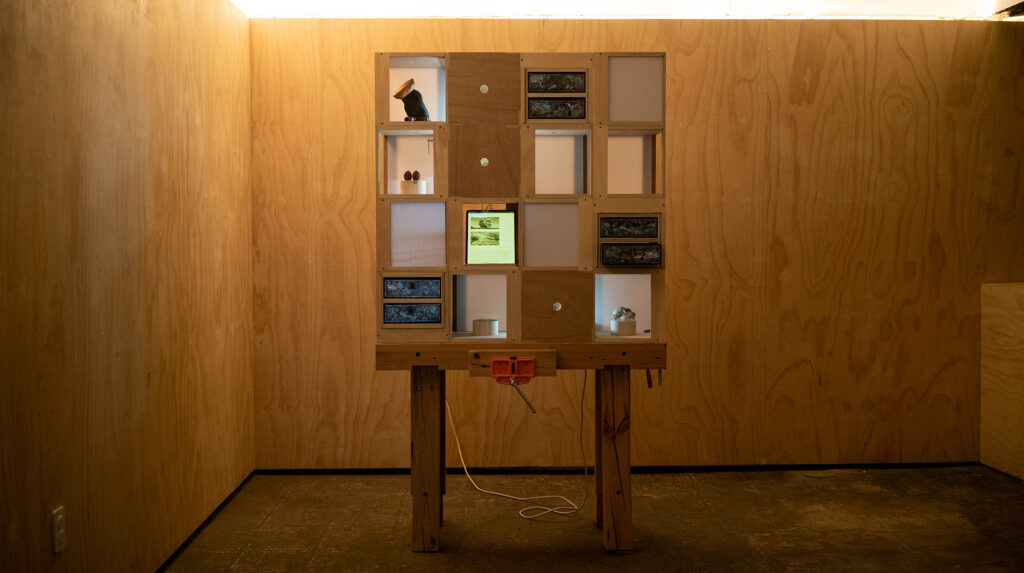
기존에 주로 영상을 통해 보여줬던 작가는 이번 산수싸리 결과전시에서는 아카이브와 설치 작업을 선택했다. 관객은 태블릿으로 작가가 수놓아 둔 구멍과 통로—링크를 통해 자신만의 구멍을 직조해나갈 수 있다. 더불어 구조물을 만든 방식 역시 재밌는데, 작가는 “흰수염들, 수석과 받침대, 동물의 머리뼈, 호두알, 참을 인(忍)이 새겨진 팔의 문신, 동물이 수놓아진 자개서랍”의 이미지를 협업 관계인 작가 김심정에게 전달했고, 김심정은 이에 따른 조형물을 제작했다.

9)

조형물 디자인 곳곳에 담겨있는 시각적 단서들은 아일랜드 주토피아로 갈 수 있는 또 다른 통로이다.
즉, 작가는 결과물을 전적으로 통제하지 않는다. 작가는 우리가 땅에 구멍을 파고 식물을 심어 수확하는 것과 같은 ‘구멍’을 파는 것이 아니다. 다시 말해, 작가는 특정한 결과물을 얻기 위해 구멍을 직조하지 않는다. 작가는 “재배를 초월한 생태론자”로서 구멍을 다듬고 이를 통해 관계를 생성한다.

10)

작가가 만든 구멍-관계 속에서 다양한 층위의 혼합과 이탈이 끊임없이 이뤄지고, 그 결과는 “예상할 수도 없고 필연적이지도 않다.”

11)

이는 ‘제멋대로’라고도 표현할 수 있을 것이다. 그렇기에, 작가가 또 어떤 다른 구멍을 자아내 이 아일랜드 주토피아 속 여러 이야기들을 펼쳐나가게 될지 더욱 기대된다.

  1. ‘상상’ 네이버 국어사전 그리고 정민, “[정민의 세설신어] [109] 견골상상”, 조선일보, 2011년 6월 9일, https://www.chosun.com/site/data/html_dir/2011/06/09/2011060902530.html.
  2. 참조, 고영찬, <언홈리 아일랜드 주토피아>.
  3. ‘아일랜드 주토피아’는 전라남도가 추진하다가 좌초된 뒤 신안군이 이어받아 발표한 사업명이다.

    참조, 박지훈, “[핫이슈] 부활한 ‘사파리 아일랜드’…전남 관광 부흥 이끌까”, 남도일보, 2020년 11월 9일, https://www.namdonews.com/news/articleView.html?idxno=589576.
  4. 작가 포트폴리오 참조.
  5. Alastair Bonnet, “Unruly Places” the author’s wesite, https://alastairbonnett.com/unruly-places/.
  6. 참조, 히토 슈타이얼, 『진실의 색: 미술 분야의 다큐멘터리즘』, 안규철 옮김, 워크룸프레스, p108.
  7. 참조, 슈타이얼, 『진실의 색』, p111.
  8. 참조, 빌렘 플루서, 『몸짓들-현상학 시론』, 안규철 옮김, 워크룸프레스, pp. 143-152.
  9. <이-음> 세미나 시간에 작가와 나눈 대화 참조.
  10. 참조, 플루서, 『몸짓들』, 150.
  11. 참조, 플루서, 『몸짓들』, 147.

※본 원고는 산수싸리 이-음 Ver.3 프로그램을 통해 작성되었습니다.
PIXSEL|Simone Dompeyre|2021

픽셀은 다큐멘터리적 욕망에 기반한 작품으로 소금 문화를 묘사하지만 소금을 보호하면 녹지 않는 것처럼 디지털 자체의 본성을 드러내기도 한다. 그는 화자인 아버지의 ‘나’라는 일인칭 시점으로 다큐멘터리 에세이를 구성한다. 이런 식으로 그는 사실에 대한 기억을 보호한다. 이 디지털 에세이는 망각에 대한 방어이자 아버지에 대한 인정이며 성취한 일에 대한 고양이지만, 화자는 50년 동안 아무것도 남기지 않았다는 씁쓸한 인상을 남긴다. 하지만 그는 아버지가 한 일을 영화로 만들어 존재 이유를 부여한다. 픽셀은 이야기의 마지막에 표현된 ‘후회’를 변모시키기 위해 노력한다.

그는 소금창고를 시적으로 표현한다. 루버를 통해 빛이 드리워진 나무판들은 조각품처럼 표현된다. 모든 요소는 흰색과 대비되어 또렷하게 돋보인다. 노란 수레 세 개를 배치하고, 한 개를 거꾸로 뒤집어 변주하거나, 때로는 한 개가 슬로우 셔터가 되어 장면을 바꾸기도 한다. 한 시퀀스에서는 균일한 황토색 또는 검은색 바닥의 균열이나 타일, 동일한 흰색 더미, 삽으로 떠낸 소금 등을 이용해 배경의 색상과 질감이 변화하는 얕은 사각형 연못을 더욱 선명하게 표현한다. 파이프 근처 물웅덩이의 반사, 더 큰 소금 더미의 빛… 하늘에서 내 려다본 트래블링 샷은 증발지 위를 날아가며 염전의 구조를 더욱 명확하게 보여준다. 모래 언덕의 뾰족한 녹색 식물, 태양을 흡수하는 검은 색, 소금의 흰색, 공중에 떠있는 듯한 창고, 모든 것이 미적 가치를 지니고 있다. 이러한 작가의 표현과 삶의 이야기를 높이 평가 하는 시선은 아버지의 노하우와 후회를 부드럽게 한다. 그리고 픽셀은 현실과 다른 방식으로 다큐멘터리라는 단어에 합성(이미지)의 정당성을 부여한다.

「PIXSEL」 비평글에서 부분 발췌 후 번역

※본 원고는 24th International Encounters Traverse 작품 비평을 통해 작성되었습니다.
« Pixsel est une animation documentaire inspirée du travail de mon père et de mon grand-père. Dans ce travail je me suis intéressé à la filiation et à la transmission. J’ai d’abord fait une interview avec mon père pour lui demander pourquoi il a pris la suite de son père. Il m’a dit directement qu’il n’y avait aucune influence de son père mais il m’a raconté plus de choses que ce que j’avais prévu. Après notre conversation, j’ai décidé de garder sa parole dans les archives. Et j’ai créé mon marais salant. »
Un mot valise dénomme le film : pixel et sel et non une erreur d’orthographe ni même la prononciation coréenne qui serait « piksel » que l’on pourrait retenir puisque les mots du père expliquant le métier de saunier qu’il a dû accepter alors qu’il avait fait des études d’architecte, les fermetures actuelles des salines, les nécessités pour fabriquer le sel et les étapes des divers matériaux des traditionnels au dernier écologique… ce discours de spécialiste est énoncé en voix over en coréen, origine de l’artiste Youngchan Ko. Cette langue peu pratiquée en France participe à l’impression de poésie du film. Les mots ne sont pas ceux de la tribu, leur signifiant emporte avec la tessiture du père. Et par contagion, les termes techniques comme « sel ignigène » ou la méthode Hwaryum, les informations quantifiées et les matériaux retenus de l’argile au linoléum chantent à nos oreilles. Ainsi « Pixel » puisque composition numérique et « sel » puisqu’une cabane de bois construite pour la récolte du sel.

Tout un chacun sait que c’est lors du traitement numérique, que les modifications ont lieu selon une numérisation binaire 0/1, de chacun des points et que c’est cela qui donne le nom au pixel: picture element. L’image de synthèse se conçoit avec des logiciels de modélisation construisant ses objets, à partir de données, d’algorithmes ou de modèles mathématiques.

Pixsel ne dissout pas son écriture de synthèse, il ne la cache pas dans le plan; au contraire, généralisant le fonds sans fond de l’espace numérique, il y fait voguer la maison et ses objets et y « pose » continûment le sel en tas dont il décline la taille selon les moments de la récolte et de son explication fidèle à ses diverses étapes. Ainsi le projet nie certains préjugés concernant les capacités de l’image de synthèse à ce qu’elle ne requiert pas de modèle référentiel; que, dès lors, sans original, elle n’est plus une trace du « ça a été »; ce qui éloigne d’elle les formulations serinées pour l’image comme « miroir du monde », « fenêtre ouverte » ou « illusion de présence ».

Son projet, avec les nombres, informent son modèle. Le sens reste sa référence et ce sens, c’est la relation d’un fils à son père qui passe par son explication de son métier. Il ne fait pas preuve de son savoir, il ne s’inscrit pas dans la preuve de la potentialité de la machine. Est révolu le temps d’A Computer Animated Hand quand Edwin Catmull – futur président de Disney-Pixar, dont la main est le modèle et Fred Parke – c’était en 1972 – composent le « premier » film en animation 3D par ordinateur.

Pixsel se fonde sur le désir documentaire, il décrit la culture du sel mais il exhibe aussi sa propre nature numérique qui ne se dissout pas plus que le sel quand on le protège. Il compose un essai documentaire à la première personne; du moins le « je » du père qu’il relaie. Ainsi protège-t-il la mémoire du fait. Cet essai en numérique est une défense contre l’oubli, une reconnaissance du père et une certaine exaltation de ce travail bien fait mais qui laisse de l’amertume avec l’impression de n’avoir rien laissé après ses cinquante ans de travail… il fait film de ce que le père a fait, lui rendant une raison d’être. Pixsel s’engage à transformer « les regrets » énoncés en fin de récit.

Il le fait poétiquement: la grange pourrait rejoindre les sculptures, son bois avec les claires-voies laissent passer la lumière. Elle se dresse nette sur le blanc. Les brouettes jaunes exposent leur forme en trio plus une renversée modifiant l’ensemble du même ou l’une devient un lent volet pour changer de plan. La série entraîne plus nettement, encore, les bassins carrés peu profonds, dont le fond change de couleur et de texture: uniforme en ocre ou noir, craquelures ou carrelage avec le tas identique blanc, le sel avec sa pelle. Le reflet de l’eau près de tuyaux peints différemment, la brillance de tas plus gros du sel… Le travelling zénithal précise les contours en survolant l’espace, les bassins d’évaporation. Tout y reprend valeur esthétique, les plantes vertes impertinentes sur les dunes, le noir qui absorbe le soleil, le blanc du sel, la maison comme en lévitation, adoucissant les regrets du père puisque grâce à cette parole du petit-fils, son savoir-faire, l’histoire de sa vie s’apprécient.

Et Pixsel apporte de la légitimité de la synthèse pour la parole documentaire dans une manière différente d’établir des rapports avec la réalité.